Rainy-day activities with no trip to the shops
By Steve Hicks · Updated
These rainy-day activities with no trip to the shops are for parents stuck indoors with children aged 3 to 12 and an afternoon to fill. There are eleven projects, covering junk models, homemade instruments, painting, threading and a little science. The quickest take 20 minutes and the longest takes an hour.
They use the sort of things already in the house: cardboard boxes and tubes, clean tins, string, sticky tape, kitchen foil, paper, paint, dry pasta and wooden spoons. A few of the later projects call for beads, embroidery thread or a balloon, so they depend on what is in the craft drawer. Start with the recycling, then see what else can be made from it on the make-with pages.
1Junk Robot
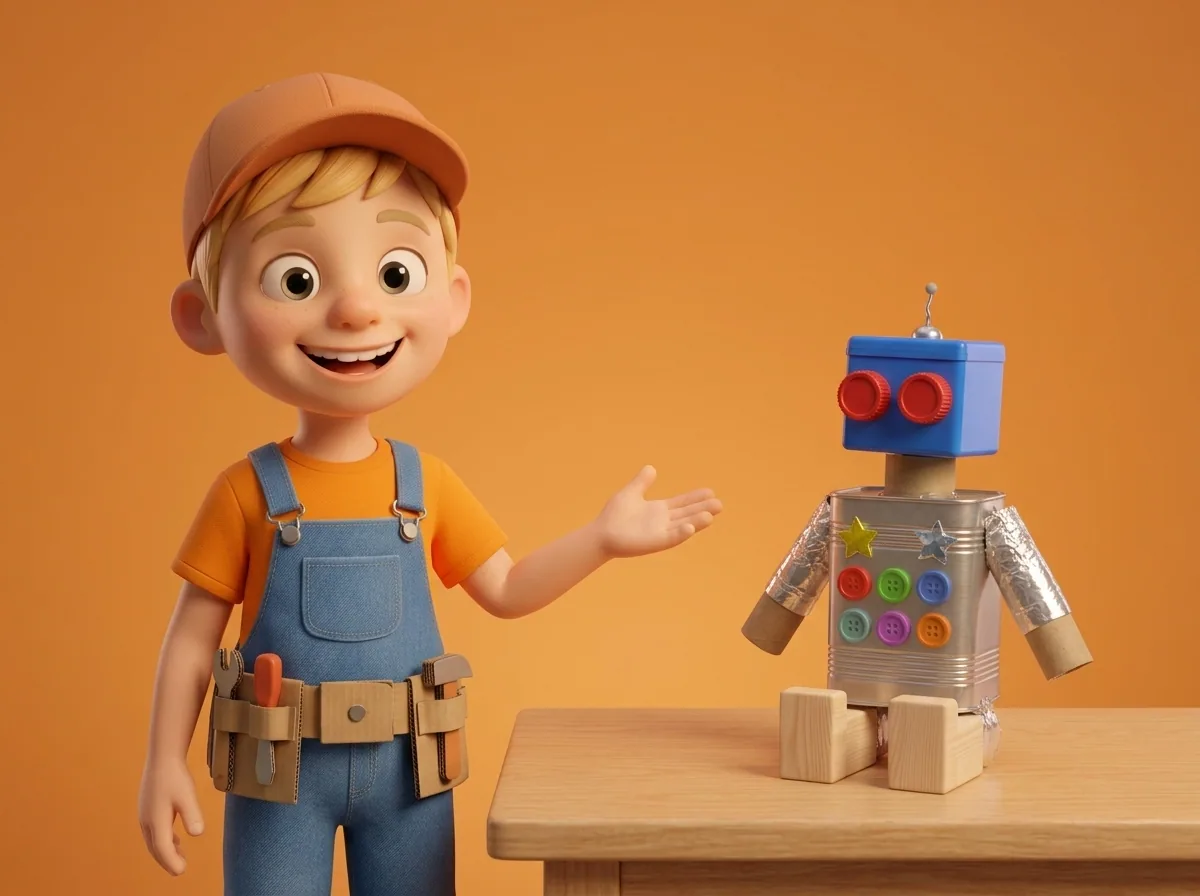
One box or clean tin becomes the body, with smaller boxes, tubes and cans taped or glued on as a head, arms and legs. Bottle caps, buttons and kitchen foil make the eyes and dials. Planning a build from the parts to hand is the point, and it suits ages 4 to 12. Cover any sharp can rims with tape.
2Cardboard Marble Run
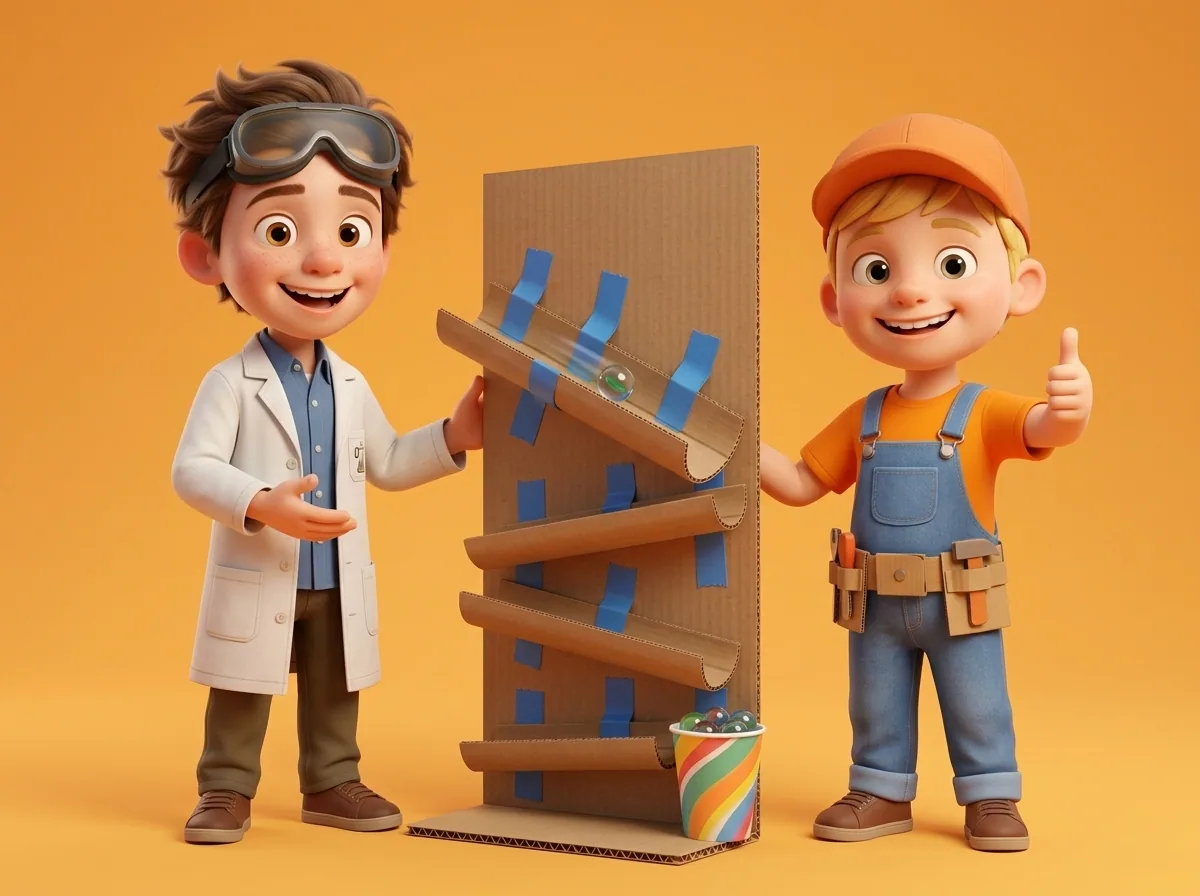
Kitchen roll and toilet roll tubes are taped down a tall piece of cardboard, some cut into open troughs, so a marble rolls from one to the next and into a cup at the bottom. Children see how gravity and slope affect speed. An adult should help with cutting, and marbles are a choking hazard for under-threes.
3Tin-Can Telephone
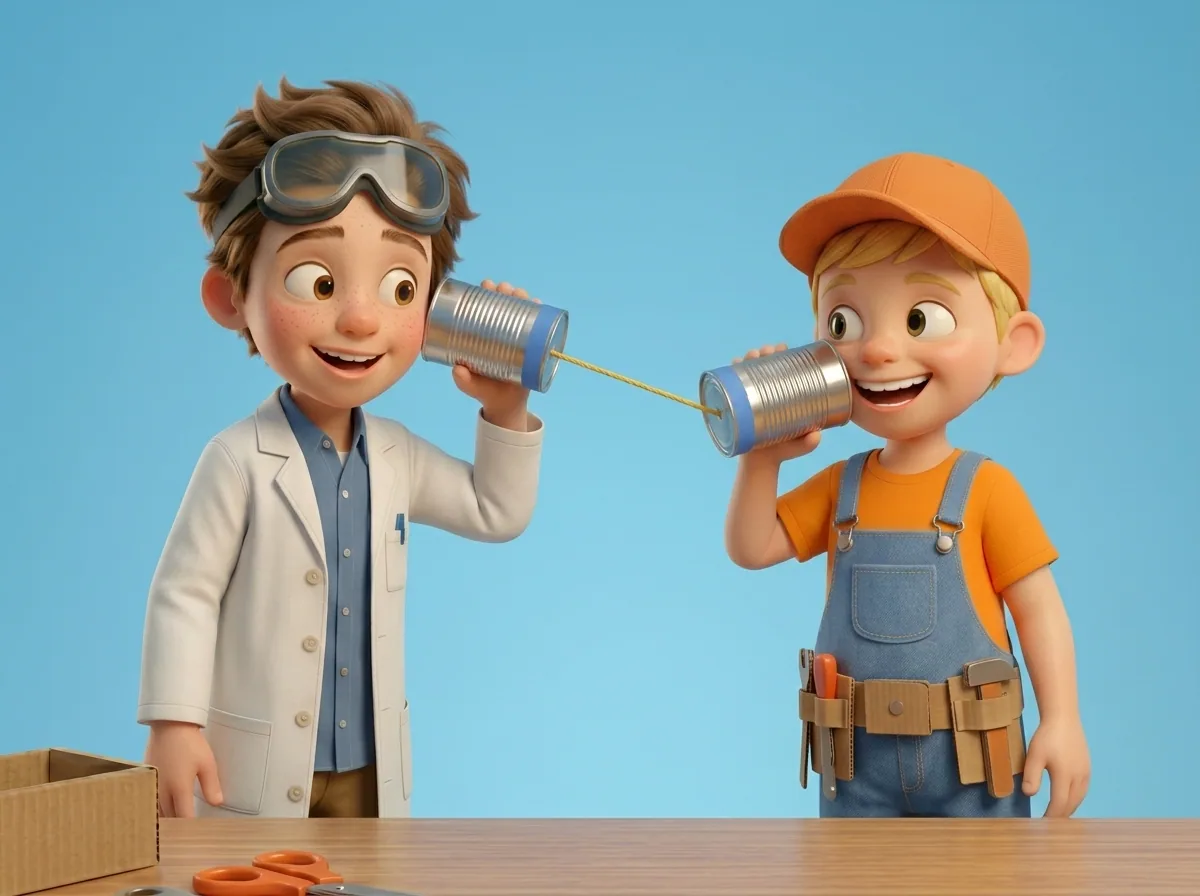
Two tins or paper cups are joined by 5 to 10 metres of string, knotted inside a hole in each base. With the string tight, a quiet voice at one end can be heard at the other, because sound travels as vibrations along the string. An adult must pierce the cans, and paper cups are safer for younger children.
4Junk Drum Kit
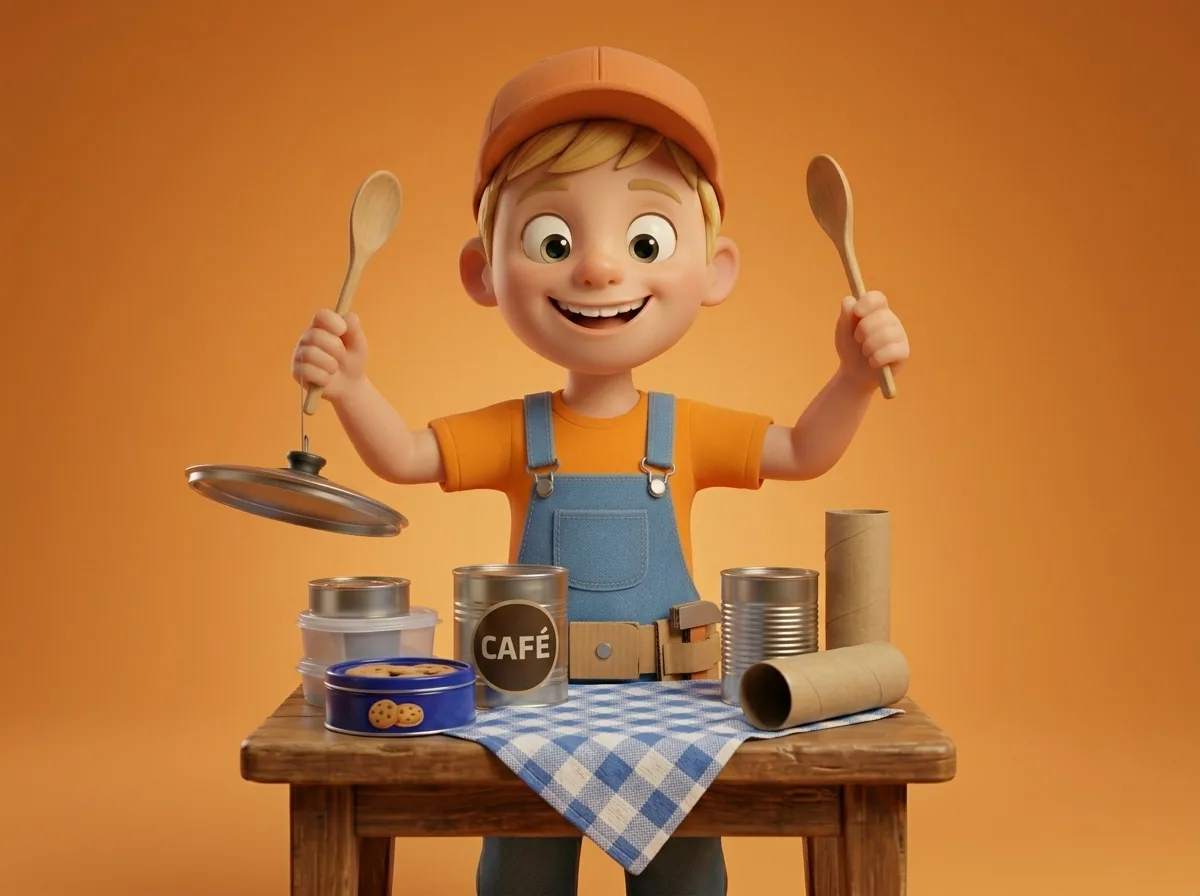
Three to six empty tins, tubs, pots and boxes are turned upside down and arranged in a curve, with wooden spoons or unsharpened pencils as drumsticks. Tapping each one shows that big hollow containers sound deep and small tight ones sound sharp. Children from age 3 can join in. An adult should tape over any rough rims first.
5Astronaut Helmet
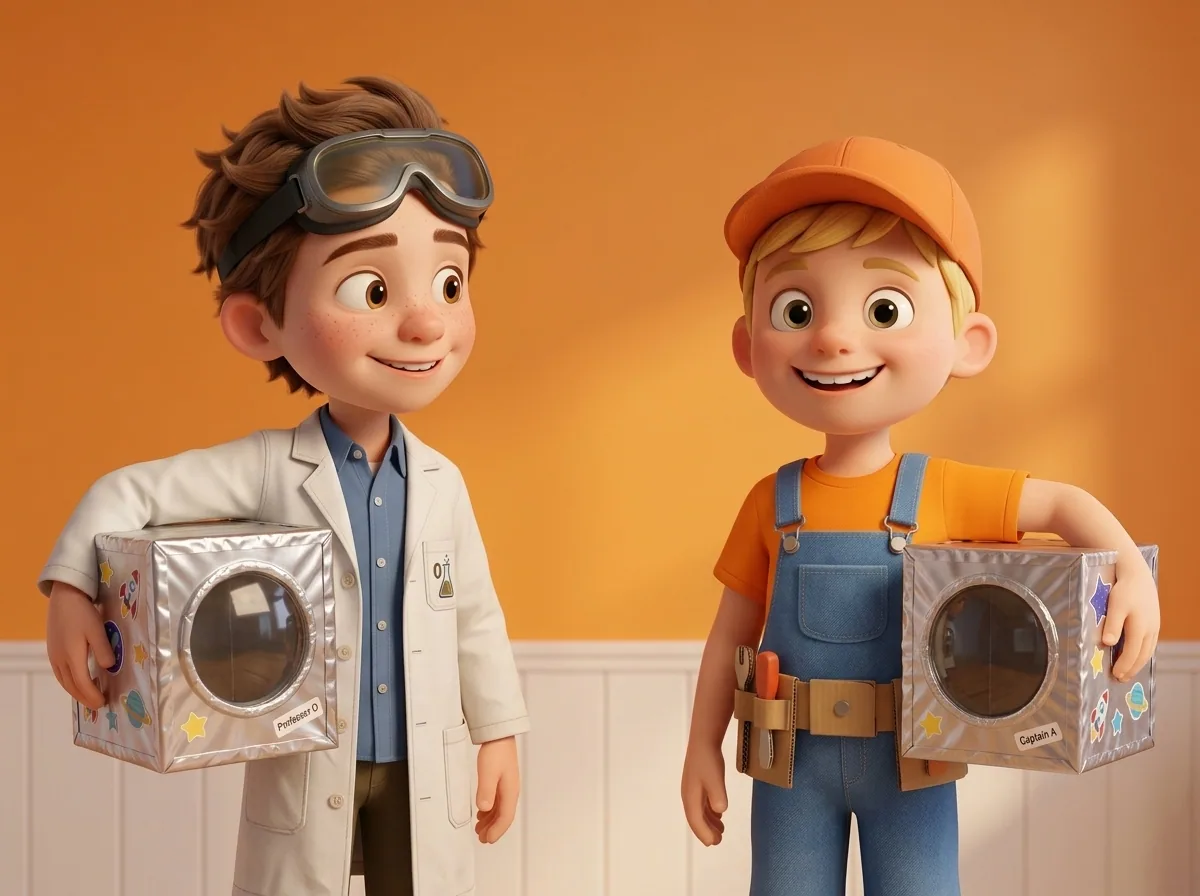
A cardboard box big enough to fit over the head is covered in silver foil, with a large face hole and stickers or flags for decoration. Children learn why astronauts need a sealed helmet in space, where there is no air. An adult cuts the face hole. The helmet must fit loosely and never cover the nose or mouth.
6Blow-Straw Painting
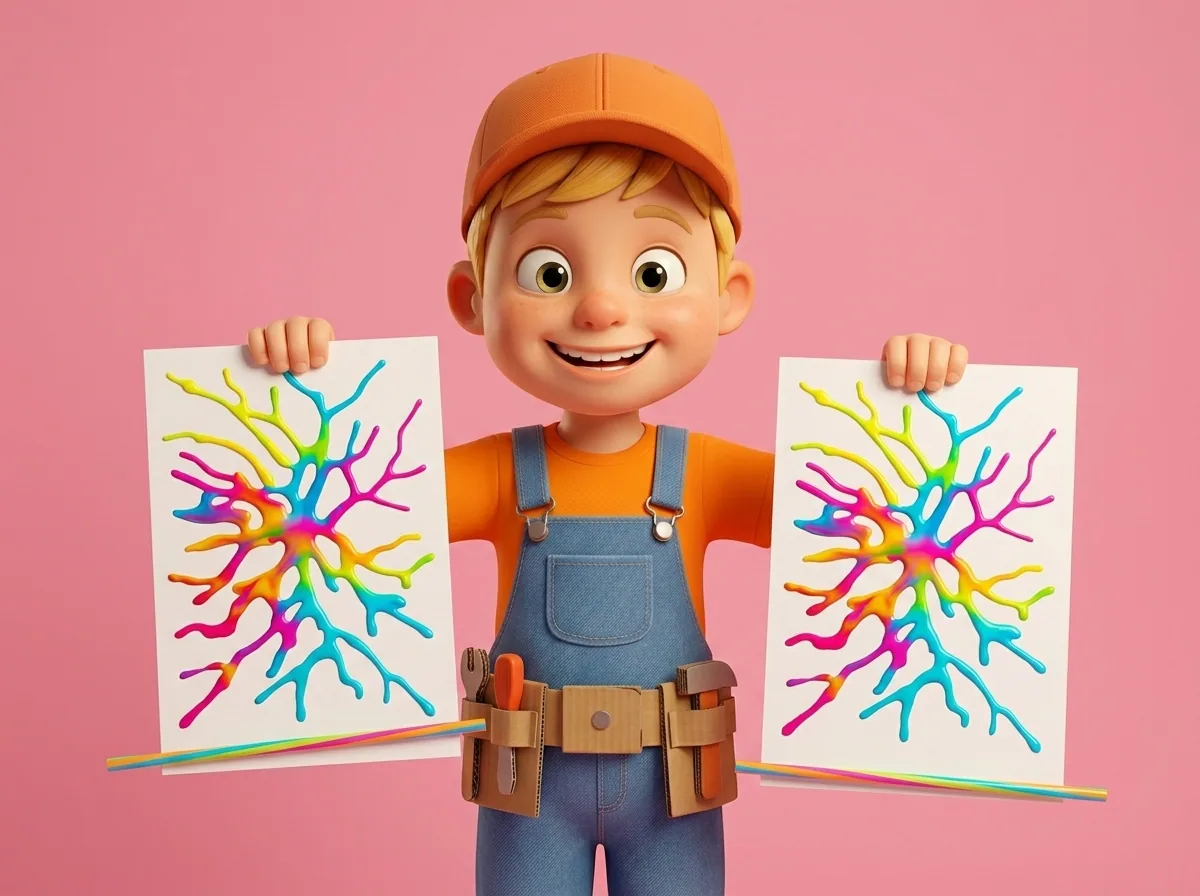
A blob of runny paint is spooned onto paper, then blown through a straw so it spreads into spidery branches. Turning the paper and adding more colours lets the branches meet and mix. It takes 20 minutes and shows moving air pushing the paint around. Remind children to blow out, never suck in, and cover clothes and the table.
7Symmetry Butterfly Puzzle
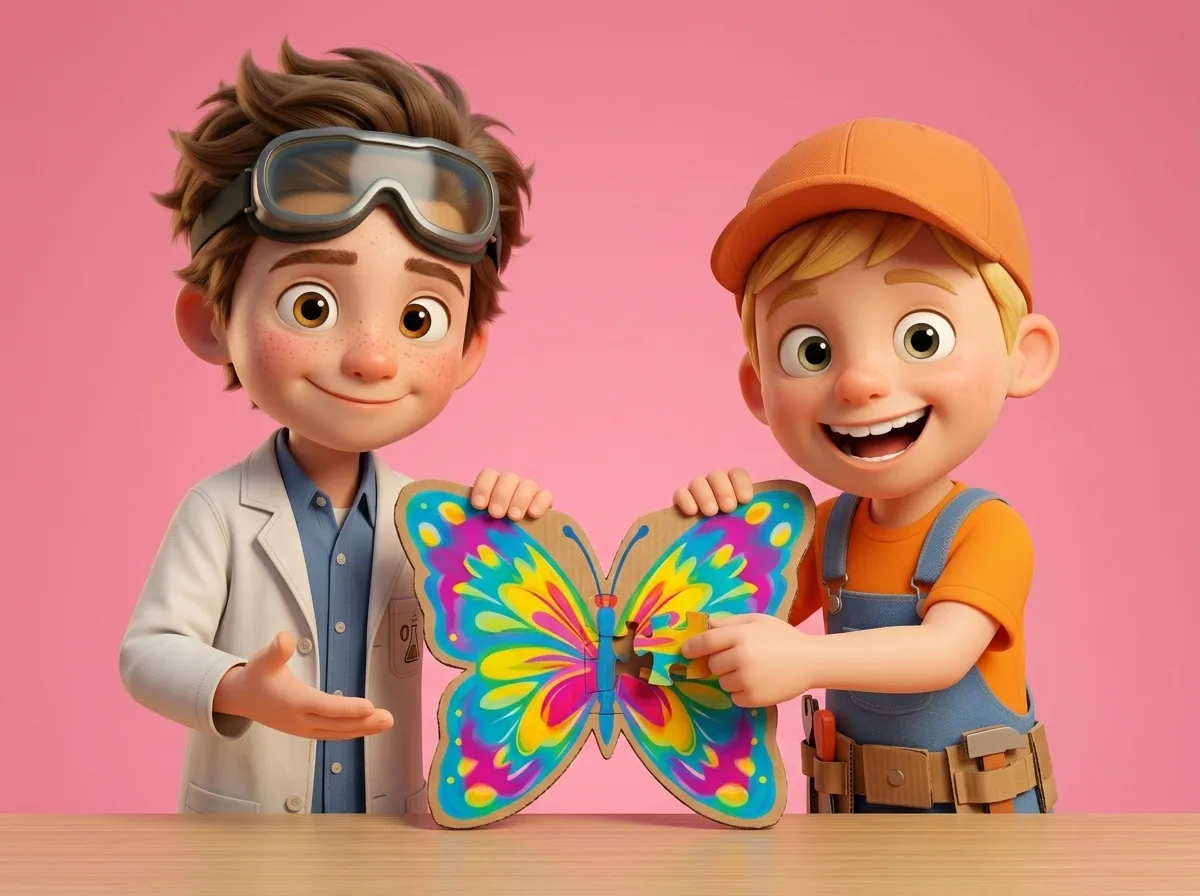
Paper is folded in half, half a butterfly is drawn along the crease and blobs of paint are added to one side only. Folding it shut and smoothing it over prints a matching pattern on the other wing. This is line symmetry, where one half mirrors the other, an important part of maths. Cover the table if using paint.
8Threading Pasta Necklaces
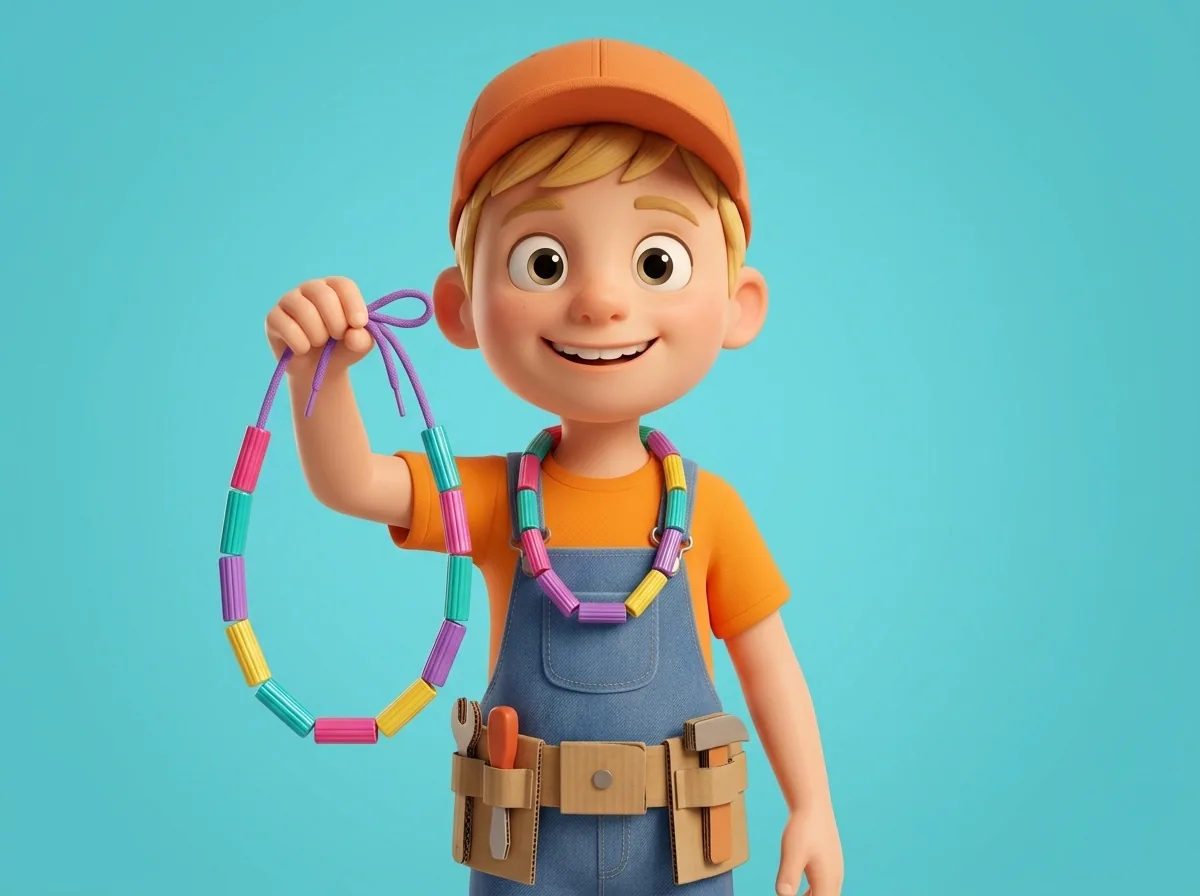
Dry tube pasta such as penne or rigatoni is shaken in freezer bags with food colouring and a little vinegar, left to dry for about an hour, then threaded onto a shoelace or thick wool. For ages 3 to 6, it builds hand-eye coordination and patience. Keep the string short and never leave a child alone wearing the necklace.
9Binary Code Name Bracelet

Two colours of bead stand for 1 and 0. Each letter of a name is looked up on a binary chart and threaded onto elastic as a pattern of eight beads, with a spacer bead between letters. It shows how computers store every letter using two symbols. Small beads are a choking hazard, so keep them away from under-threes.
10Chevron Friendship Bracelet
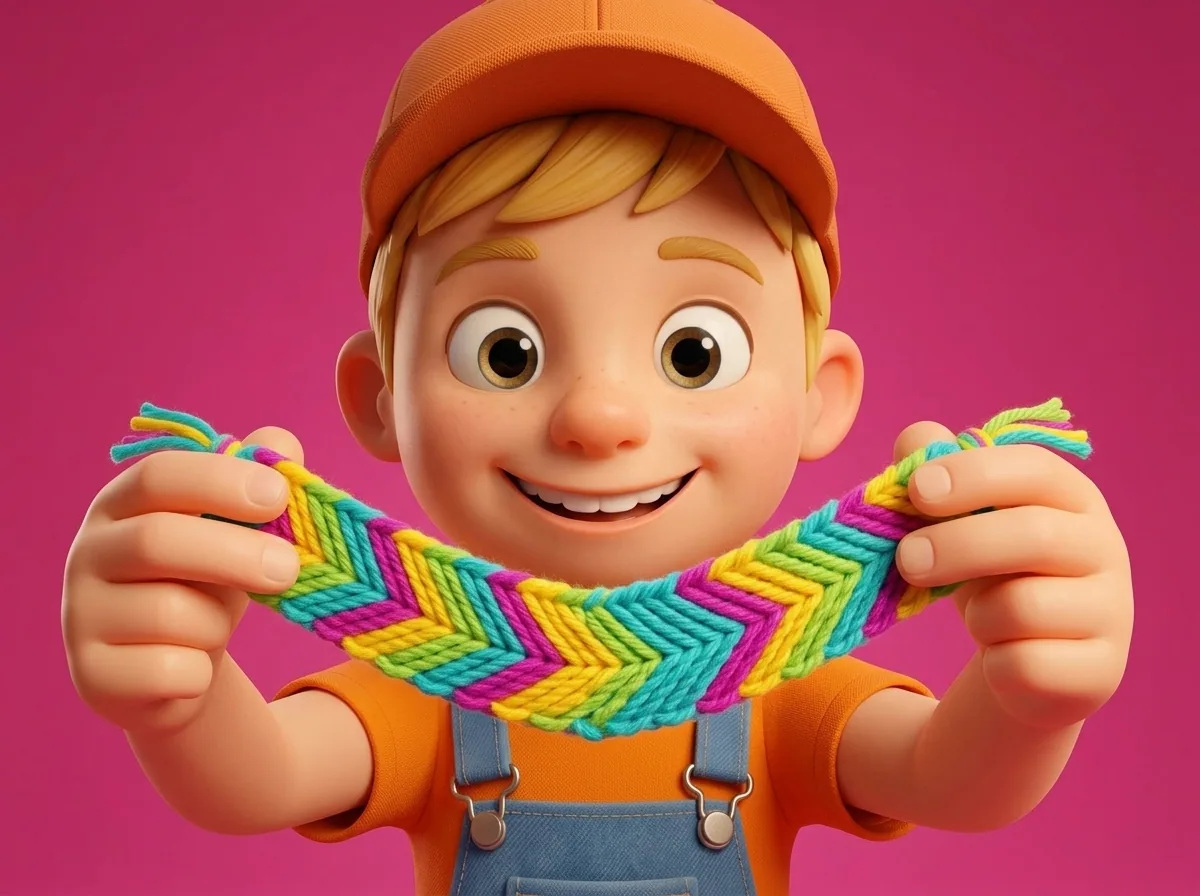
Embroidery thread in three or four colours is knotted row after row into V shapes, with the top taped to a table or pinned to a cushion. The repeating knots teach sequencing and pattern-making, and reward patience with a stripey band to tie around the wrist. Allow 45 minutes. The only other things needed are scissors and sticky tape.
11Balloon Hovercraft
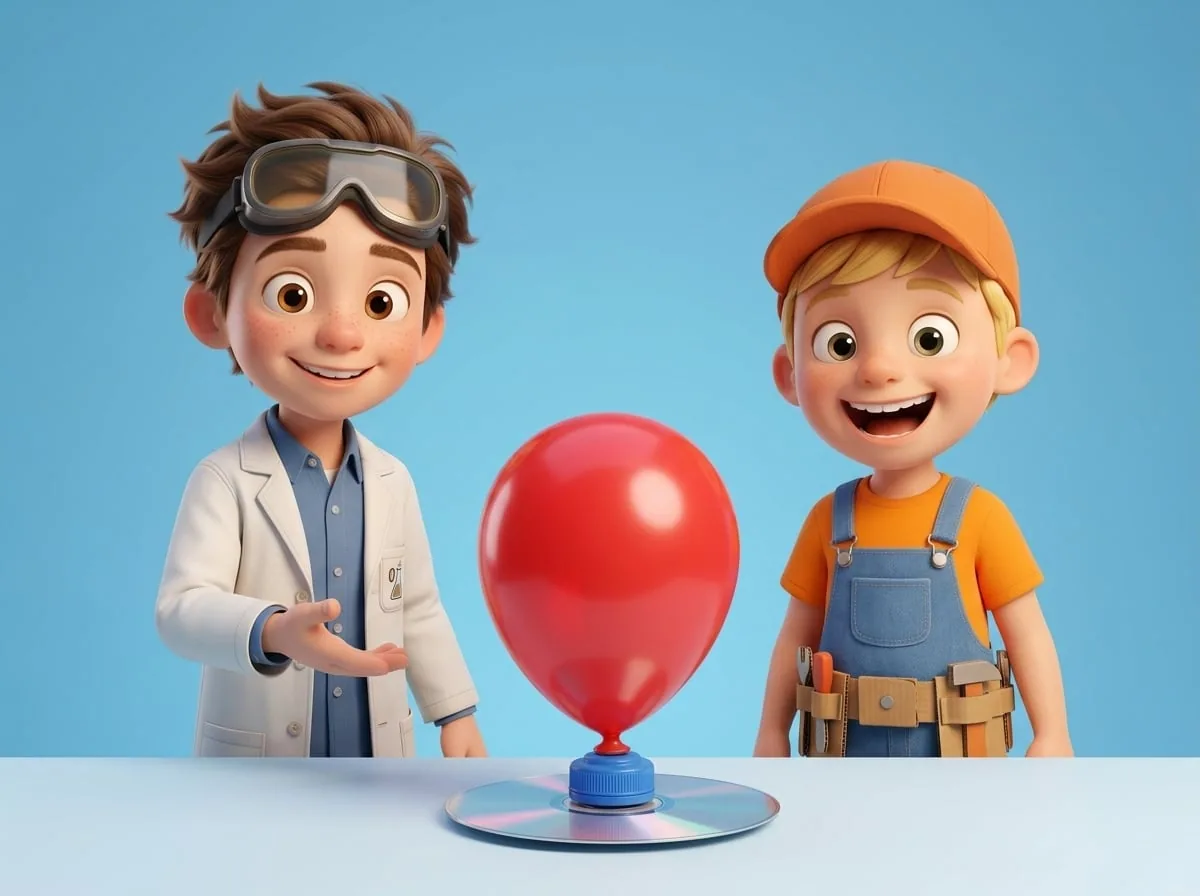
A pop-up bottle cap is glued over the hole in a CD, and a blown-up balloon stretched over the closed cap. Pull the cap open on a smooth table and the disc glides, because a cushion of escaping air reduces friction. An adult should help with the glue and blow up the balloon, as balloons are a choking hazard.
A wet day rarely calls for anything new. Keeping a box of clean tins, tubes and cardboard to one side means the next downpour is covered. More round-ups like this one are in the guides.
Want the whole library?
Sign up free to open every free project, save your children's ages and get new ideas each week.
More ideas
See all ideas →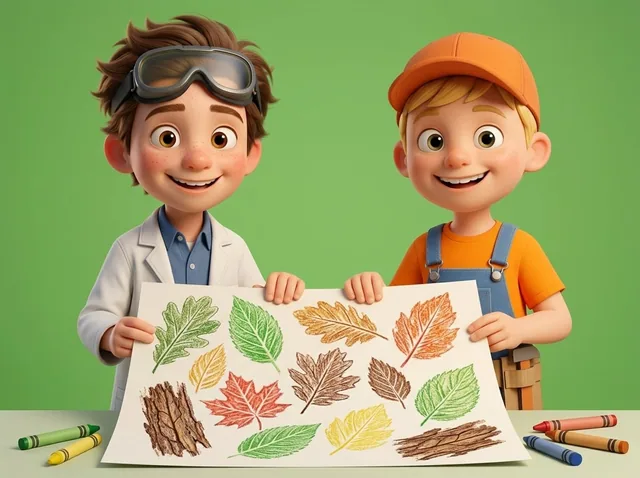
October half-term activities to do at home
Eleven October half-term activities to do at home, from leaf rubbings and a marble run to bread in a bag, made with household junk and kitchen basics
11 projects inside →

Kitchen science experiments with cupboard ingredients
Twelve kitchen science experiments for children using cupboard ingredients, with fizzing, freezing, colour changes and crystals, and the science explained
12 projects inside →
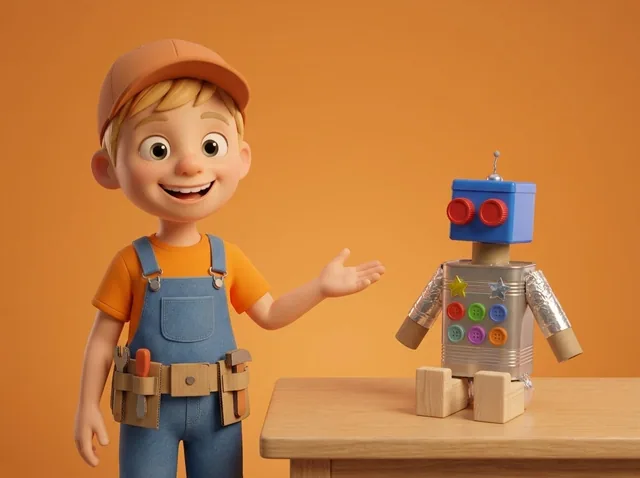
Junk modelling ideas for Reception and Key Stage 1
Ten junk modelling ideas for Reception and Key Stage 1, made from boxes, tubes, tins and egg boxes, with the skills each one builds for ages 4 to 7
10 projects inside →