Kitchen science experiments with cupboard ingredients
By Steve Hicks · Updated
These kitchen science experiments use cupboard ingredients such as vinegar, bicarbonate of soda, lemons, salt, flour and cornflour, and they suit children from about 3 to 12. There are twelve in the list, covering fizzing reactions, freezing, colour changes, crystals and a bean that sprouts in a jar. Each one comes with a plain explanation of the science, so there is something to talk about while it happens.
Most need only a glass, jar, bowl or tray alongside the food ingredients. A few call for hot water or a heat source, which is an adult's job, and three are edible, so check for allergies first. The quickest take 15 minutes. Three need patience, with results appearing over days. More ideas are on the projects page.
1Bottle-Top Volcano

A small plastic bottle is hidden inside a mountain of scrunched newspaper and card, painted brown or grey. Baking soda, washing-up liquid and red food colouring go in, then vinegar, and foamy lava whooshes out. The foam is carbon dioxide gas, made when an acid meets a base. Stand it on a tray and keep vinegar away from eyes.
2Dancing Raisins
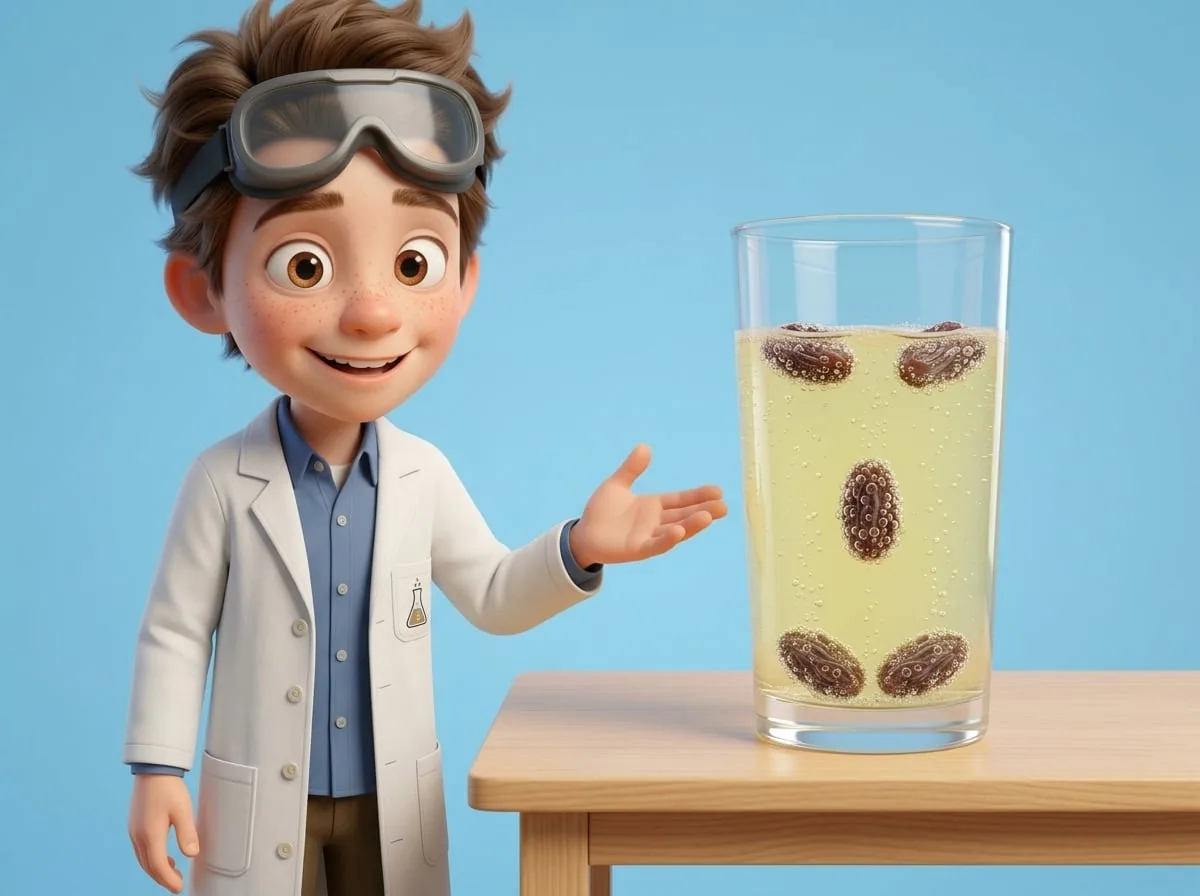
Drop four or five raisins into a tall glass of freshly opened fizzy lemonade or soda water and they rise, sink and rise again. Bubbles cling to the wrinkly surface and lift each raisin, then pop at the top. It takes 15 minutes and suits ages 4 to 9. This one is for watching, not drinking.
3Invisible Lemon Ink

Children write a secret message on plain white paper with a cotton bud dipped in lemon juice, then leave it to dry until it vanishes. Gentle warmth brings the writing back in brown, because lemon juice browns faster than the paper. An adult must do the warming, with a radiator or warm lamp the safest choice.
4Magic Cornflour Gloop

Two cups of cornflour and about one cup of water make a mixture that feels solid when punched fast and drips like a liquid from a slow handful. For ages 3 to 6, it is a hands-on first look at how materials can behave in surprising ways. Wet cornflour makes floors slippery, so wipe up spills straight away.
5Moon-Crater Impact Tray

A deep tray of plain flour dusted with cocoa powder stands in for the surface of the Moon. Dropping a marble, a bouncy ball and a small stone from different heights leaves craters to measure with a ruler, showing how the size and drop height of a space rock change the crater. Lay newspaper down first, as flour flies out.
6Ice Cream in a Bag

Milk or single cream, sugar and vanilla are sealed in a small freezer bag, then tucked inside a larger bag of ice and salt. After 5 to 10 minutes of shaking it freezes. Salt makes ice melt at a colder temperature, which pulls heat from the cream. Hold the bag in a tea towel, as it gets extremely cold.
7Fizzy Sherbet Sweets

Icing sugar, food-grade citric acid and bicarbonate of soda are stirred together in a completely dry bowl. Nothing fizzes until a dab meets a wet tongue, where the acid and the soda react and pop. The whole thing takes 15 minutes. Use clean bowls and hands, and go easy, as too much citric acid can sting.
8Homemade Fizzy Lemonade

Lemon juice, sugar and cold water are stirred together in a tall glass. A small pinch of bicarbonate of soda then makes it fizz and foam, because the soda reacts with the lemon's acid, so children aged 5 to 10 carbonate their own drink. An adult cuts the lemon. Use food-grade bicarbonate and only a pinch, or it tastes soapy.
9Bean in a Jar

Tuck a dried broad bean or runner bean between damp kitchen roll and the side of a clear jar, then stand it on a light windowsill. Over about a week the roots grow down and a green shoot grows up, all in plain view. Add a little water if the paper dries out. Dried beans are for growing, not eating.
10Naked (Rubber) Egg

Left in a glass of white vinegar for two days, a raw egg loses its shell. Tiny bubbles form as the acid dissolves it, leaving a squishy egg inside its bendy membrane. The egg also swells as water moves in, which is osmosis. Handle it gently over a tray, as it is still raw inside and can burst.
11Red Cabbage Colour Changer

Chopped red cabbage soaked in hot water gives a deep purple juice that works as a natural indicator. Shared between clear cups, it turns pink with lemon juice or vinegar and blue or green with bicarbonate of soda. For ages 6 to 12, with an adult pouring the hot water and the juice cooled before use.
12Salt or Sugar Crystal Garden

Salt or sugar is stirred into very hot water in a jam jar until no more will dissolve, which means the water is saturated. A string weighted with a paperclip hangs in the jar, and crystals slowly grow along it as the water evaporates. Best for ages 8 to 12, with an adult handling the hot water.
Vinegar and bicarbonate of soda appear in several of these experiments, so they are worth keeping stocked. A tray, a tea towel and some newspaper deal with most of the mess. For the slower ones, a quick daily check lets children follow the changes as they build up.
Want the whole library?
Sign up free to open every free project, save your children's ages and get new ideas each week.
More ideas
See all ideas →
Rainy-day activities with no trip to the shops
Eleven rainy-day activities with no trip to the shops, from a junk robot to a tin-can telephone, using boxes, tubes, tins and paint already in the house
11 projects inside →

October half-term activities to do at home
Eleven October half-term activities to do at home, from leaf rubbings and a marble run to bread in a bag, made with household junk and kitchen basics
11 projects inside →
Junk modelling ideas for Reception and Key Stage 1
Ten junk modelling ideas for Reception and Key Stage 1, made from boxes, tubes, tins and egg boxes, with the skills each one builds for ages 4 to 7
10 projects inside →