What to save from the recycling for junk modelling
By Steve Hicks · Updated
Working out what to save from the recycling for junk modelling is easier with a short list. This guide is for parents and teachers who want a useful box of materials ready, without keeping every piece of packaging that passes through the kitchen. It starts with a keep list, then matches each kind of saved material to a project, and ends with advice on storage.
There are ten projects, for children aged 3 to 12. Alongside the recycling they mostly need sticky tape, scissors, glue, paint and silver foil. Some call for an adult to cut or pierce something. More ideas are on the make with page and in the other guides.
The keep list
The most useful things to save are cardboard tubes, cereal boxes and larger cardboard boxes, which between them cover most builds. Egg boxes are worth keeping too. From the plastics, save bottles and their tops, plus yoghurt pots. Jars and tins earn a place as long as they are clean, and a small pile of newspaper is handy for scrunching into shapes and for protecting the table.
Skip anything that held raw meat. Skip anything sharp, including tins with rough rims unless an adult has taped over the edge. Leave glass out of the box for children under six, and have an adult check any jar for chips before older children use it.
1Cardboard Marble Run
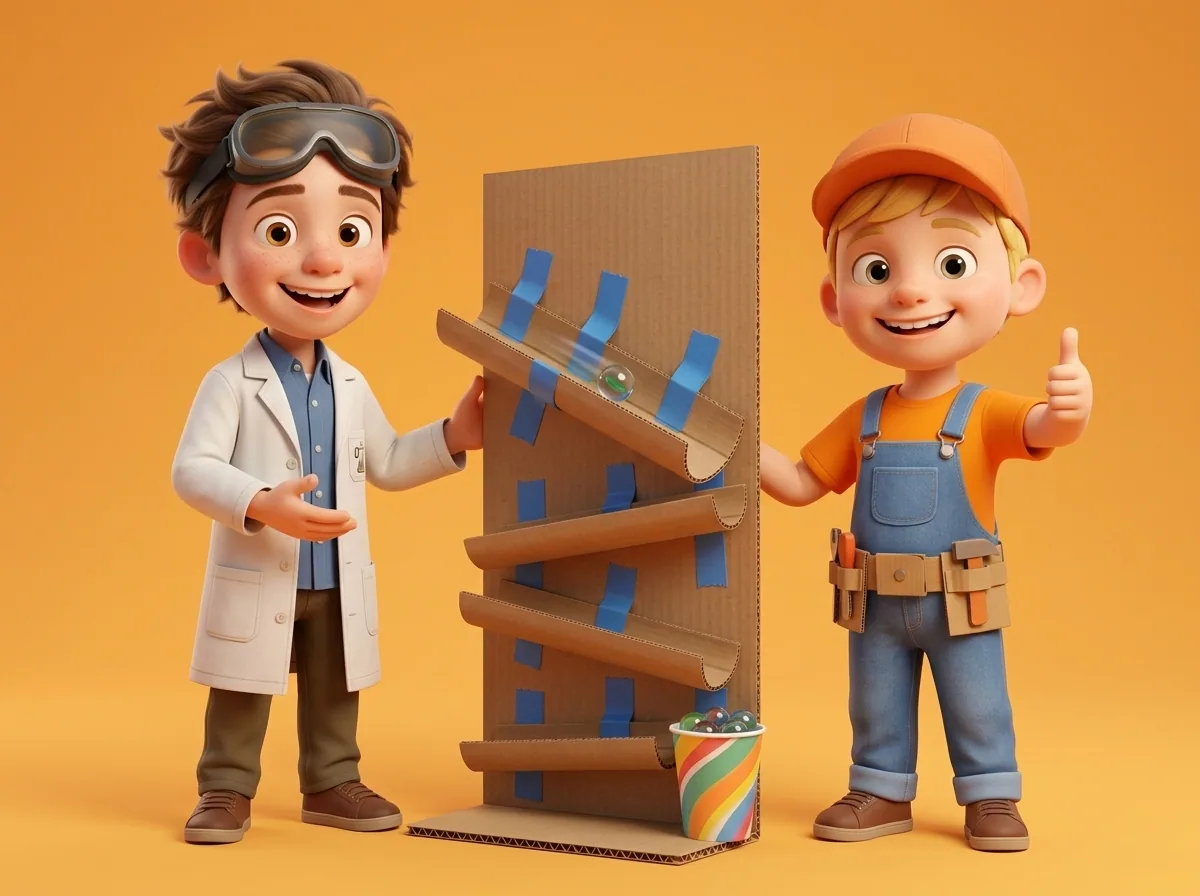
Four to six cardboard tubes from kitchen roll and toilet roll are taped downhill across a large flat piece of cardboard, some cut lengthways into open troughs. A marble drops from one to the next into a cup. Steeper ramps make it go faster. An adult should help with cutting, and a marble is a choking hazard for under-threes.
2Junk Robot
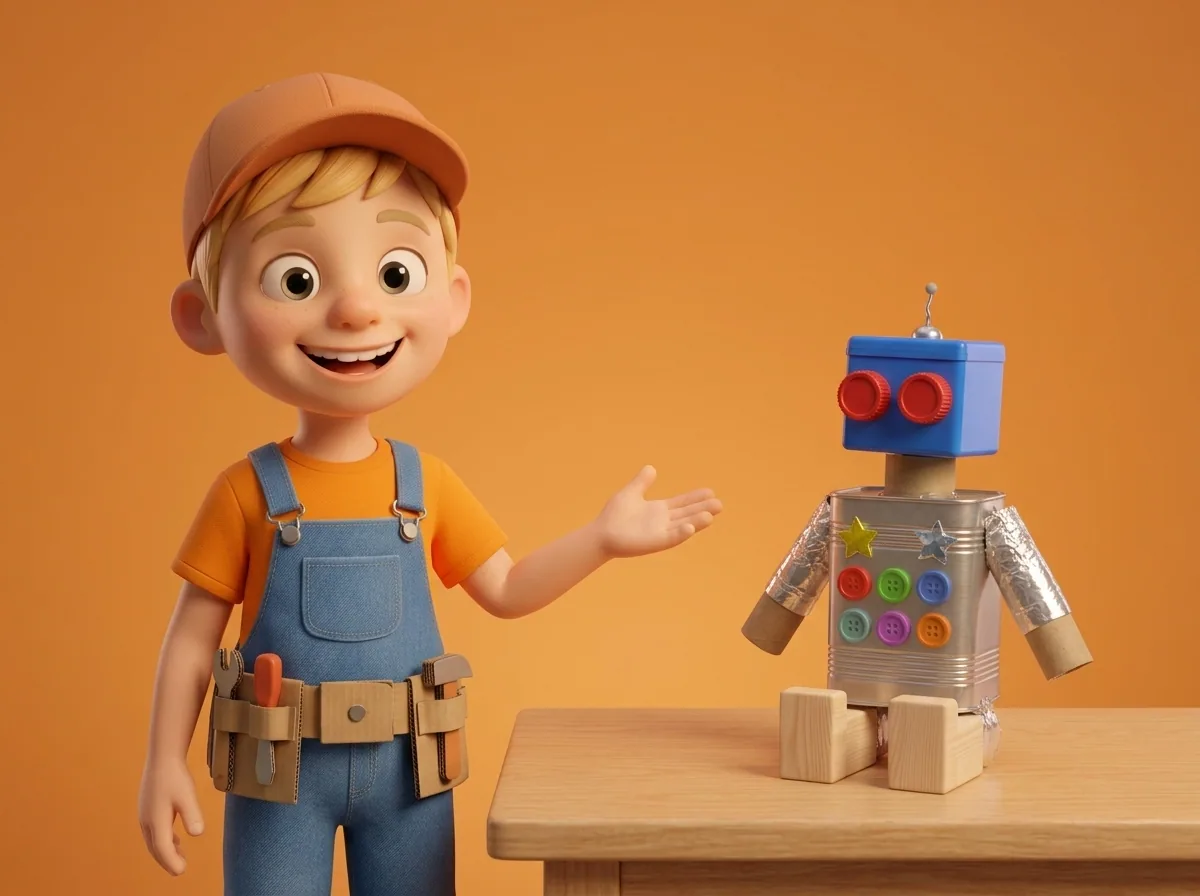
A bit of everything goes into this one. A large box or clean tin becomes the body, smaller boxes, tubes and cans make the head, arms and legs, and bottle caps become eyes. Children practise planning a design from the parts to hand. Tape over any can rims, and keep small parts away from under-threes.
3Astronaut Helmet
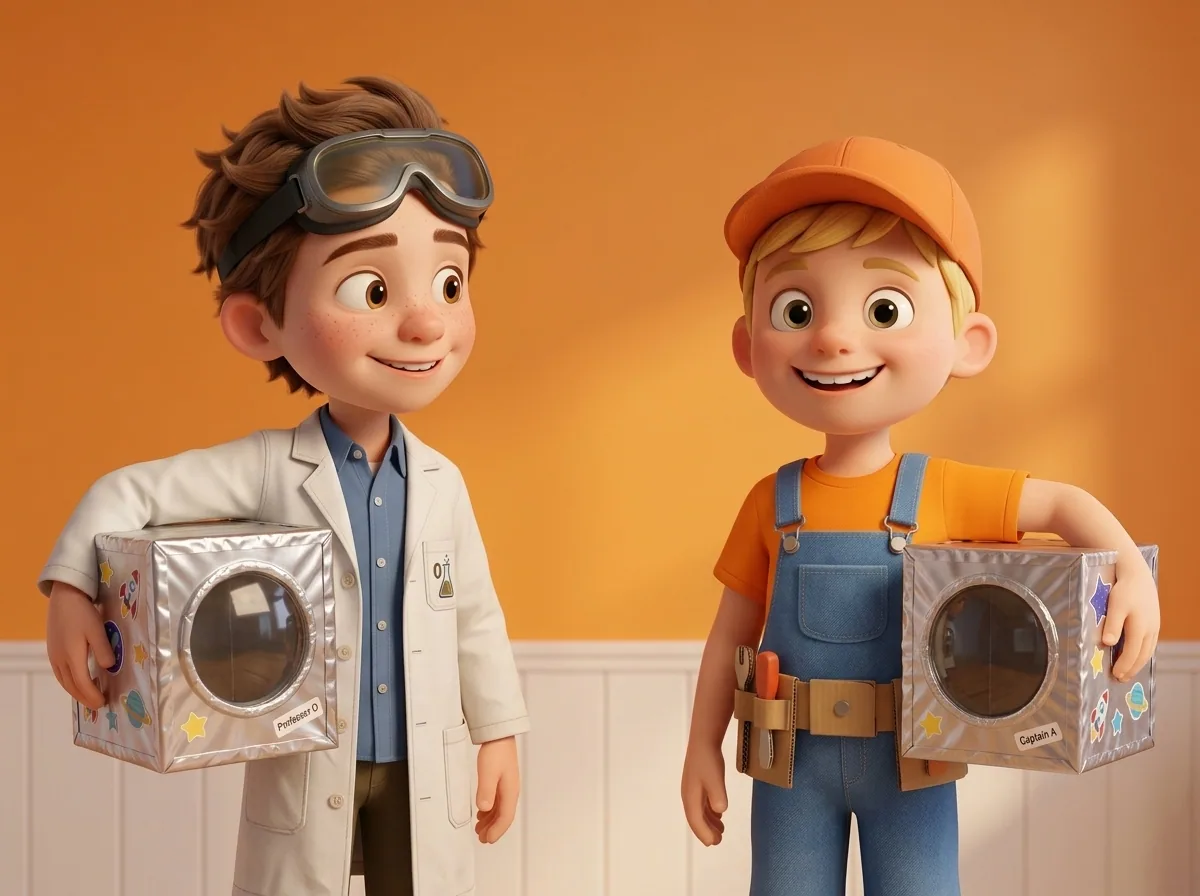
Save one cardboard box that fits over a child's head with room to spare. An adult cuts a large round face hole, then the box is covered in silver foil and decorated. It shows why real astronauts need a sealed helmet in space, where there is no air. The helmet must fit loosely and never cover the nose or mouth.
4Egg Box Bat Garland
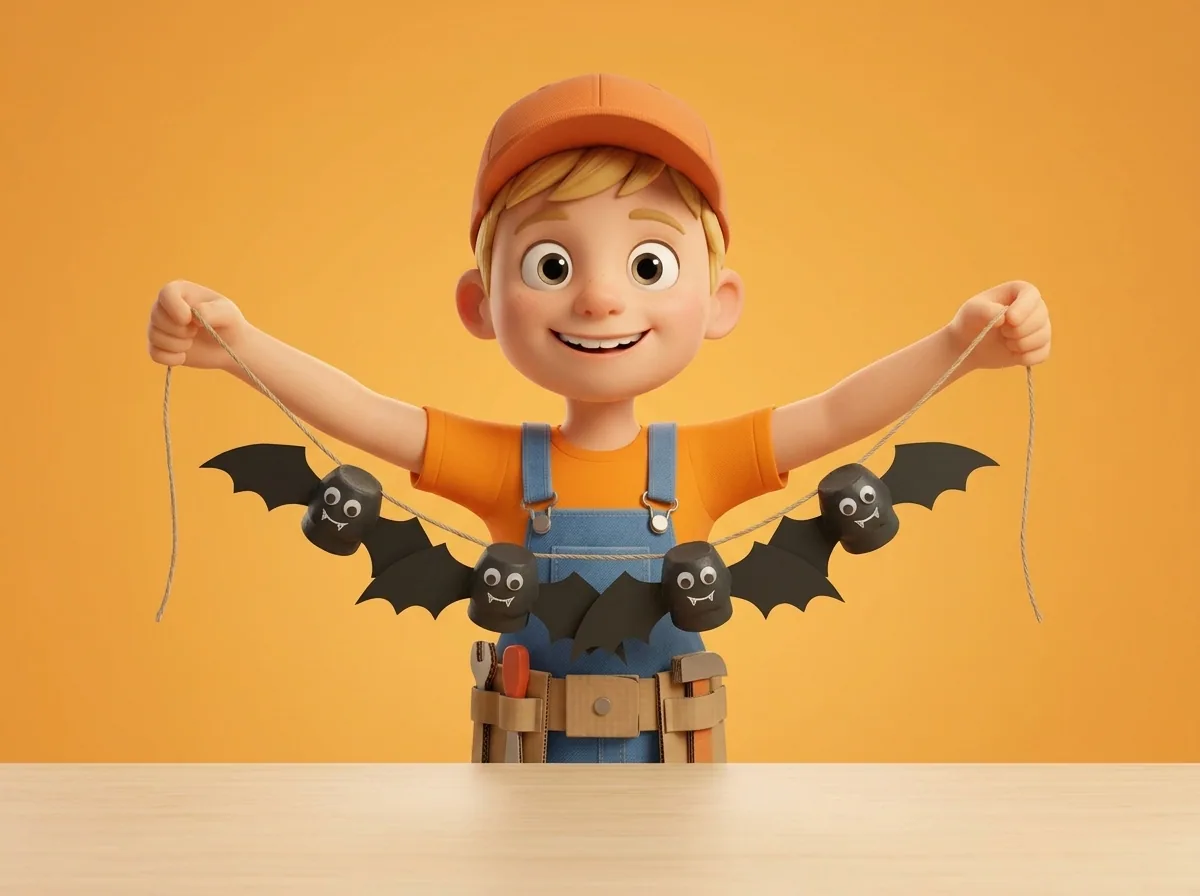
One cardboard egg box with 12 cups makes six bats. The cups are cut into joined pairs, painted black, given card wings and googly eyes, then taped along a string. Cutting matching wings from folded card is a simple lesson in symmetry. Allow 40 minutes. An adult may need to cut the cups apart, as the card can be tough.
5Tin-Can Telephone
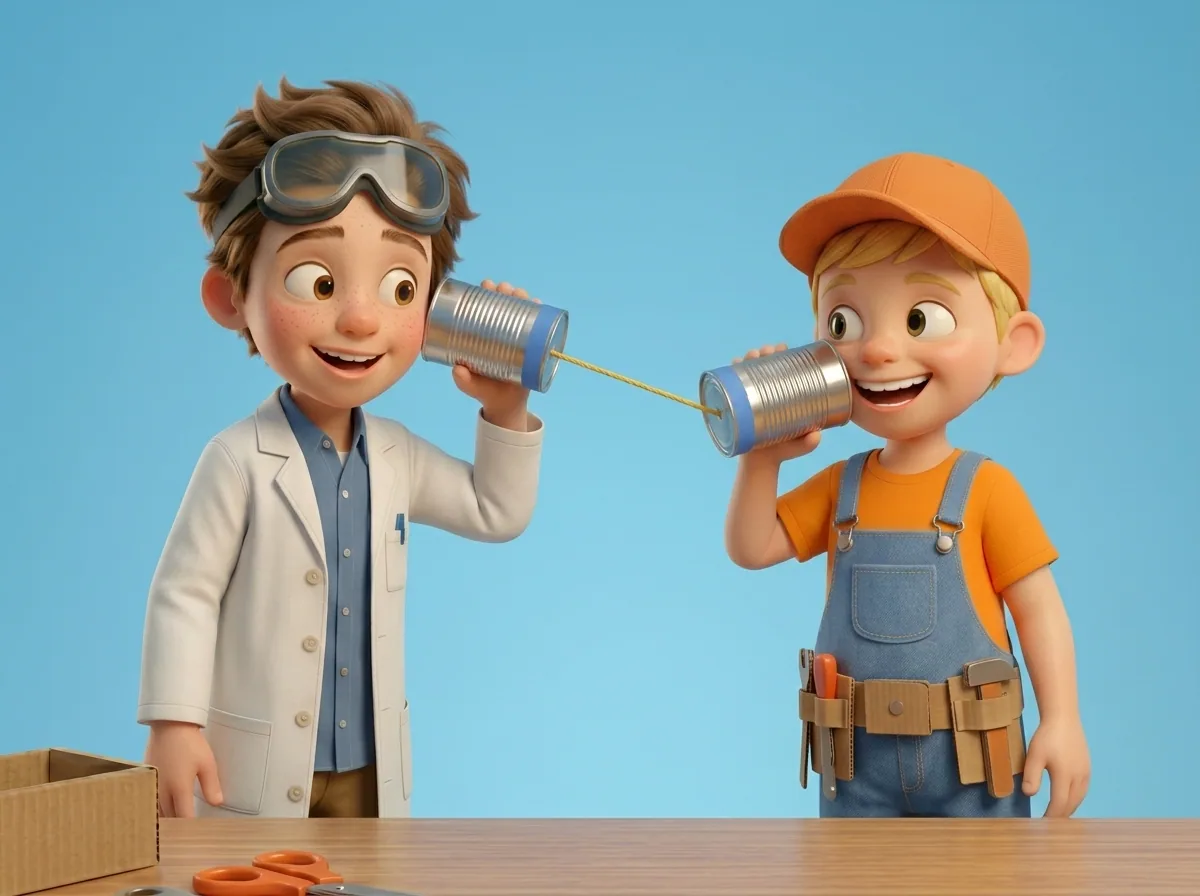
Two clean, empty tins are joined by 5 to 10 metres of string, knotted inside a hole in each base. With the string pulled tight, one child talks quietly into a tin while the other listens. Sound travels along the string as vibrations. An adult must pierce the tins and tape sharp rims. Paper cups are safer for younger children.
6Junk Drum Kit
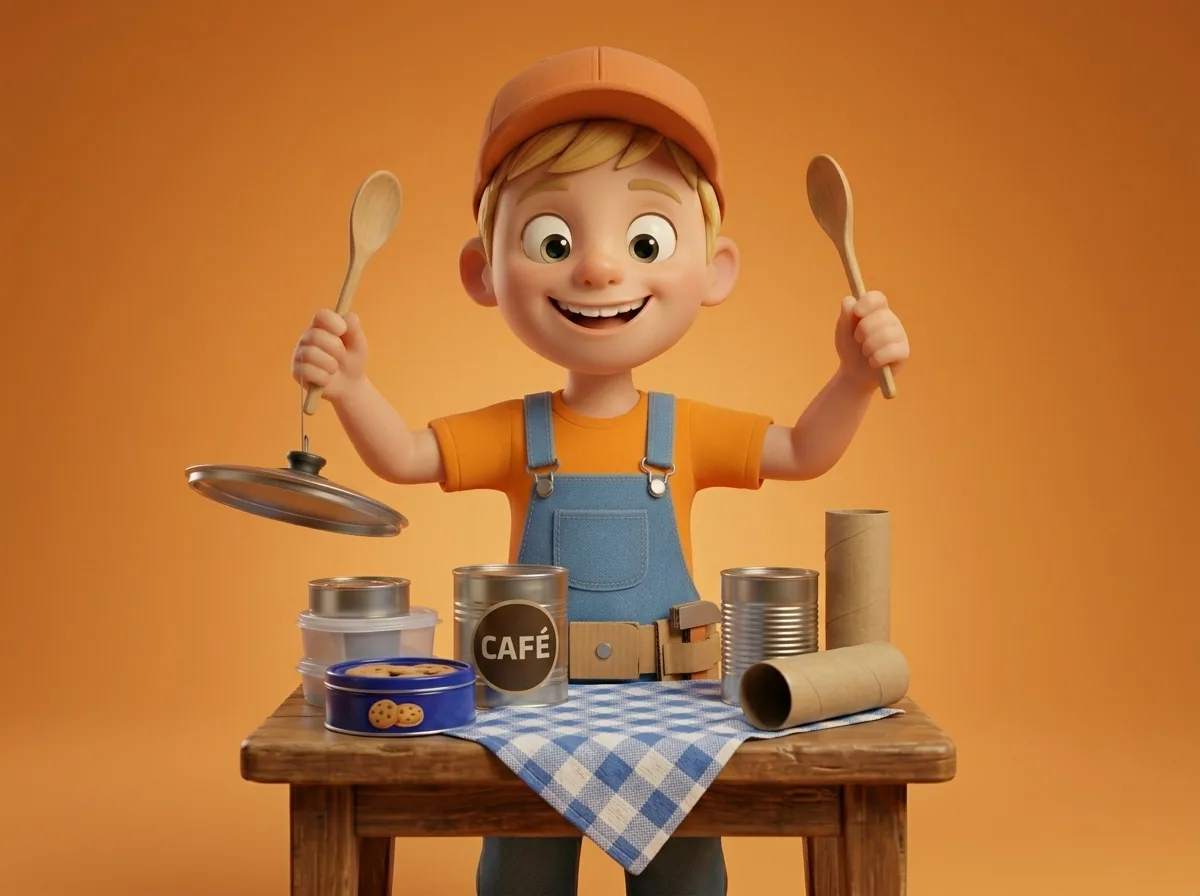
Three to six clean tins, plastic tubs, pots and boxes of different sizes are turned upside down and set out in a curve. Tapped with wooden spoons, the big hollow ones sound deep and the small tight ones sound sharp. It suits ages 3 to 9. An adult should check for sharp edges and tape over any rough rims first.
7Bottle-Top Volcano
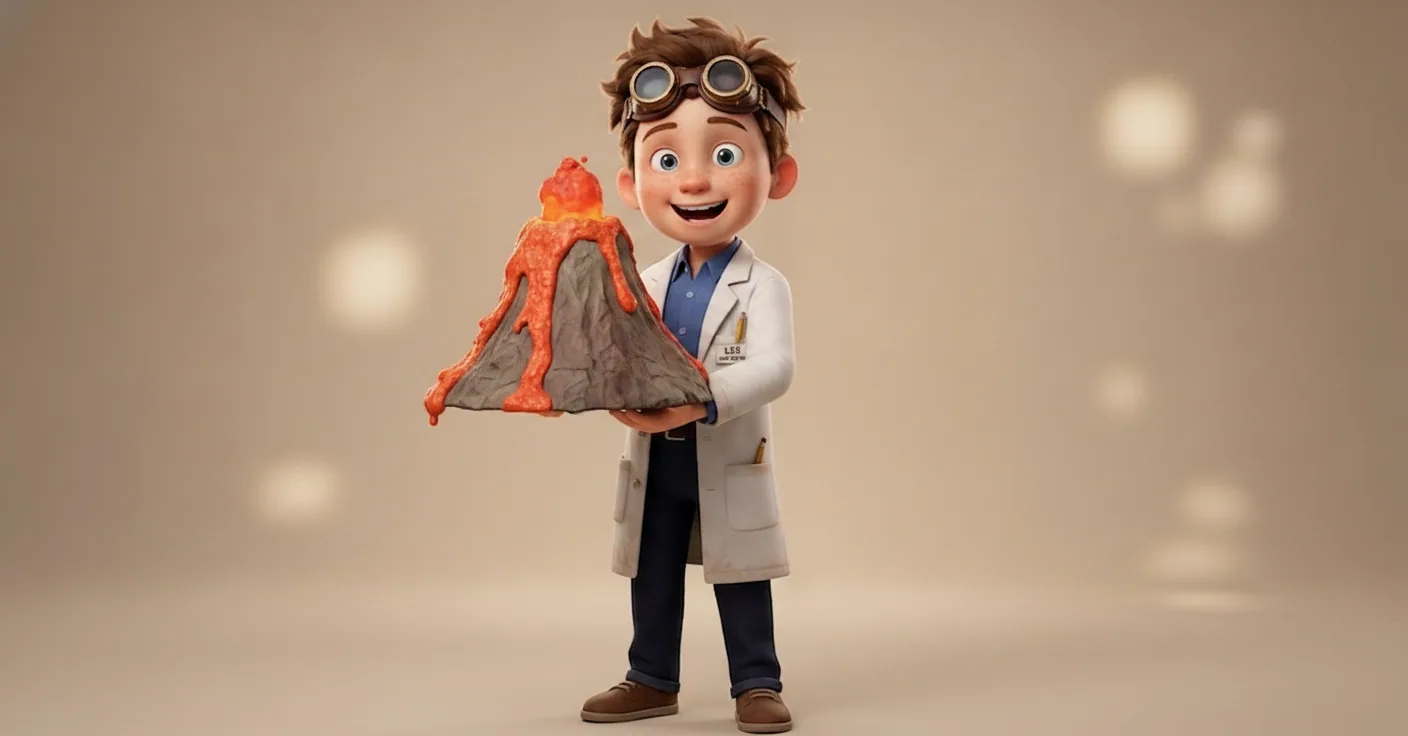
A small plastic bottle, old newspaper and a cereal box all get used here. The newspaper is scrunched around the bottle and covered with card to make a mountain, then painted. Baking soda and vinegar in the bottle react to make a foam of carbon dioxide gas. Allow 40 minutes, and set it off on a tray or outdoors.
8Star Projector Jar

A clean glass jar with a wide mouth is lined with silver foil that an adult has pricked all over with a pin. With a battery tea light inside and the room dark, tiny beams dot the walls with stars, showing that light travels in straight lines. For ages 6 to 11. Never use a real flame in the jar.
9Glowing Jack-o'-Lantern Jar
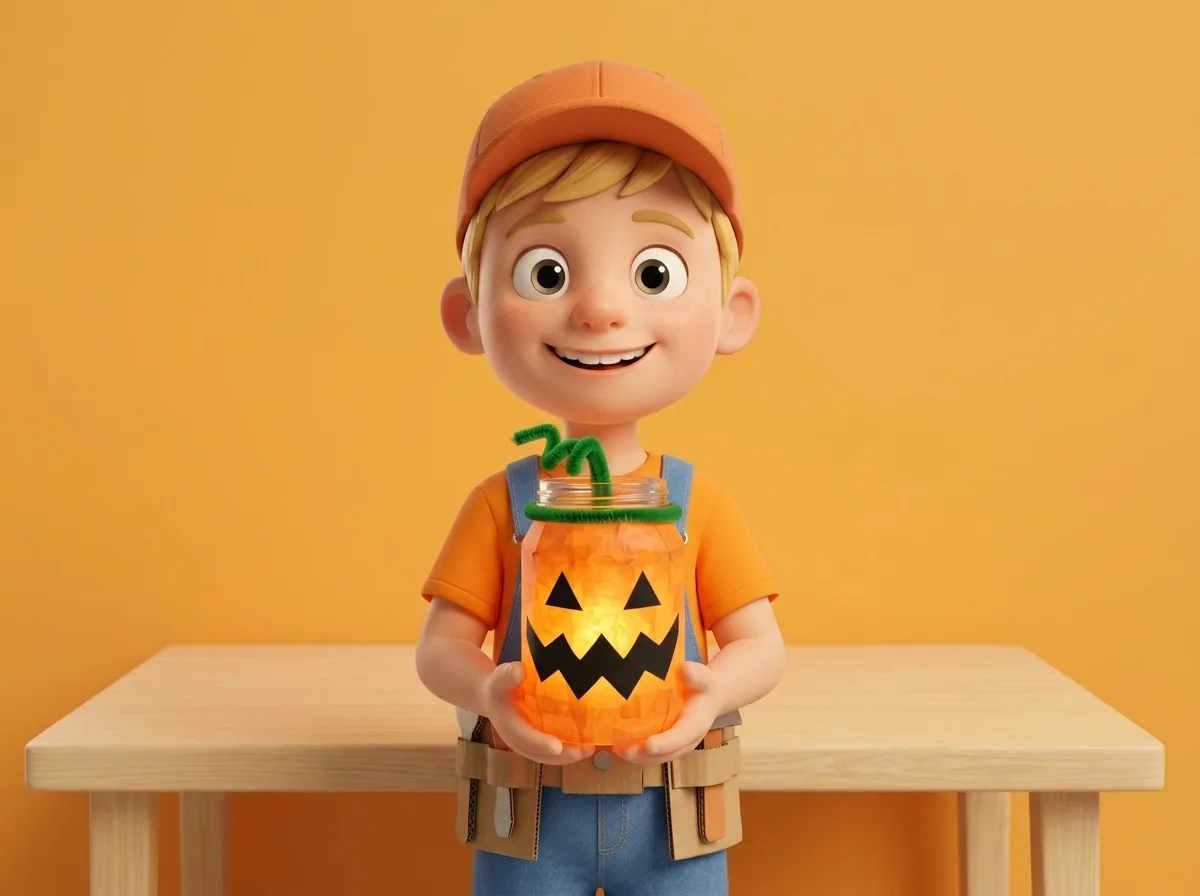
An empty jam jar with its label soaked off gets covered in orange tissue squares and watery PVA glue, then given a black paper face. Lit by a battery tea light, the tissue glows while the face stays dark, which shows the difference between translucent and opaque materials. Check the jar for chips first, and keep the battery compartment closed.
10Water Filter from a Bottle
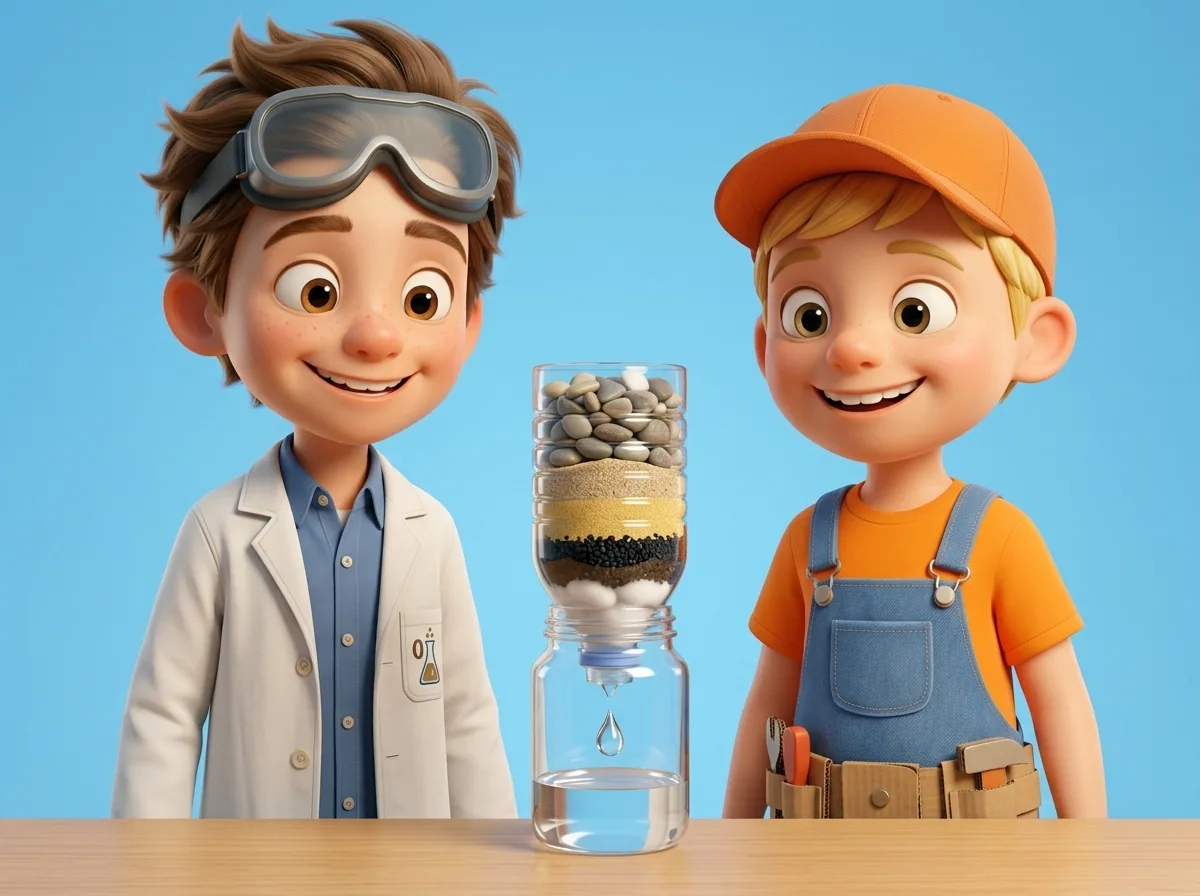
An adult cuts the top third off a plastic bottle, which is turned upside down in a jar as a funnel. Layers of cotton wool, sand, small stones and gravel trap different sizes of dirt as dirty water trickles through. For ages 8 to 12. Never drink the filtered water, as filtering does not remove germs.
How to store it without taking over the house
Keep everything in one box with a lid, and let that box set the limit. Flatten cereal boxes and larger cardboard boxes so they slide down the side. Rinse bottles, pots, tins and jars, then let them dry fully before they go in. Stand tubes inside one another to save space. When the lid no longer shuts, have a clear-out. Put back in the recycling whatever has sat untouched, and keep the pieces that get picked first.
A box of saved recycling does not need to be full before it is useful. A few tubes, one good box and a jar are enough to start several of these projects, and the collection can grow from whatever turns up next in the kitchen.
Want the whole library?
Sign up free to open every free project, save your children's ages and get new ideas each week.
More ideas
See all ideas →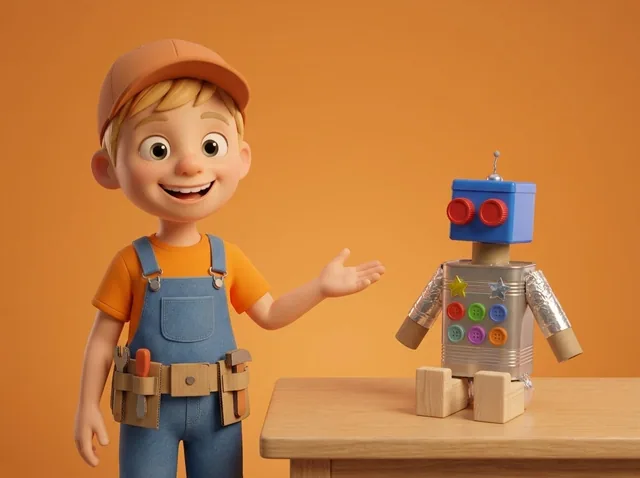
Rainy-day activities with no trip to the shops
Eleven rainy-day activities with no trip to the shops, from a junk robot to a tin-can telephone, using boxes, tubes, tins and paint already in the house
11 projects inside →
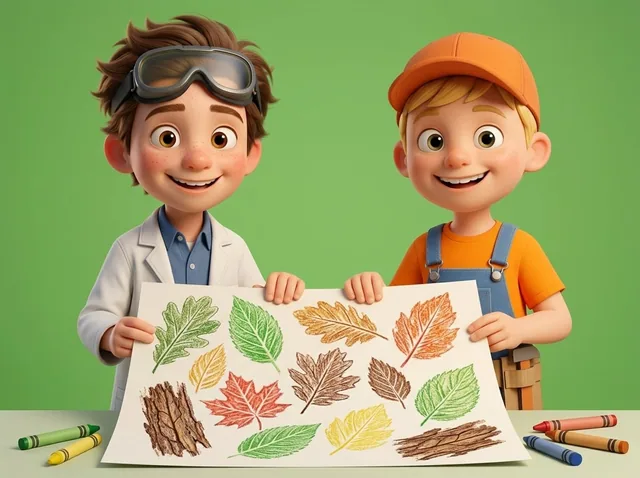
October half-term activities to do at home
Eleven October half-term activities to do at home, from leaf rubbings and a marble run to bread in a bag, made with household junk and kitchen basics
11 projects inside →
Kitchen science experiments with cupboard ingredients
Twelve kitchen science experiments for children using cupboard ingredients, with fizzing, freezing, colour changes and crystals, and the science explained
12 projects inside →