Activities and crafts for 7-year-olds
By seven, children can read most of the steps themselves and stick with a project for longer. These activities reward that: stronger structures, simple machines, kitchen chemistry and makes they will want to keep and show off.
48 projects to try
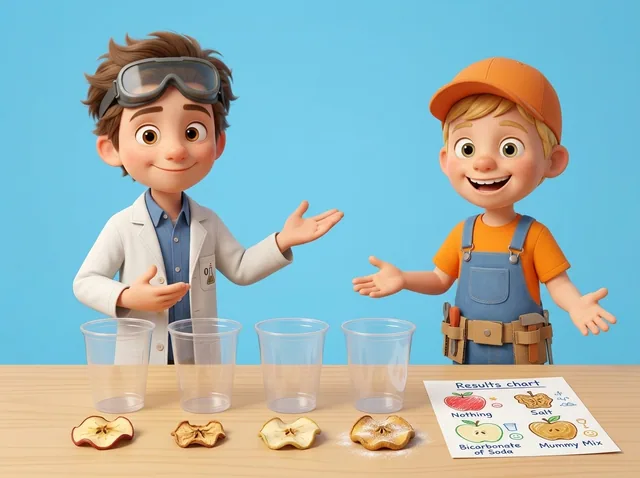
Mummified Apple Experiment
Children test how the ancient Egyptians preserved mummies by burying apple slices in salt and bicarbonate of soda for a week. The salts draw water out of the apple, and without water the things that cause rot cannot grow. It is a real fair test with measuring and recording.
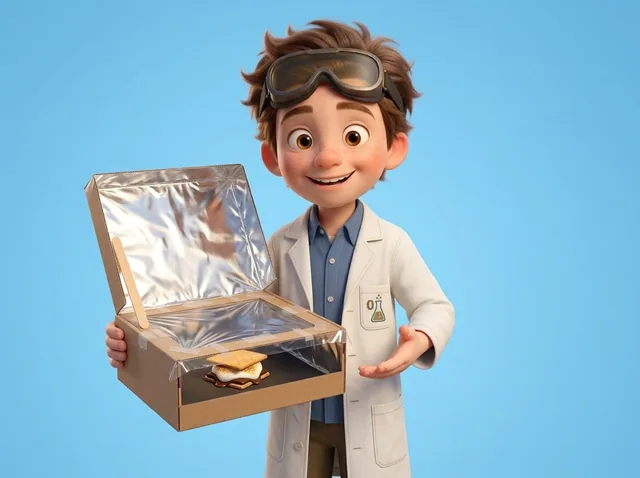
Shoebox Solar Oven
Children explore renewable solar energy and heat absorption by building a simple oven that traps light and converts it into thermal energy. This introduces fundamental thermodynamic concepts such as insulation, reflection, and radiation in a delicious, hands-on way.
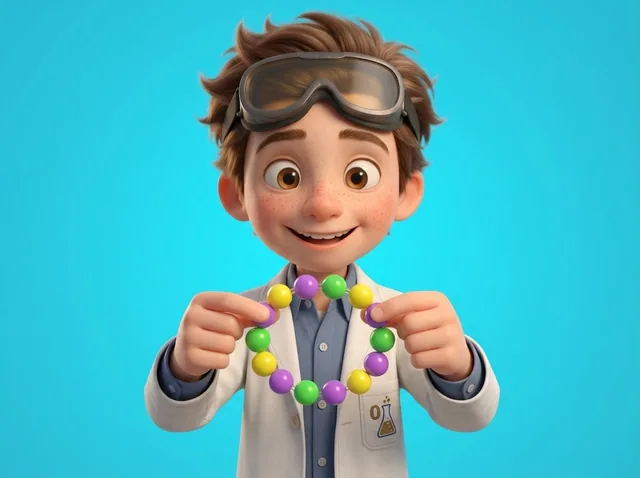
Binary Code Name Bracelet
Threading two colours of bead in patterns of eight shows how computers store every letter as a secret code of just two symbols. Children discover that ones and zeros can spell out anything, including their own name.
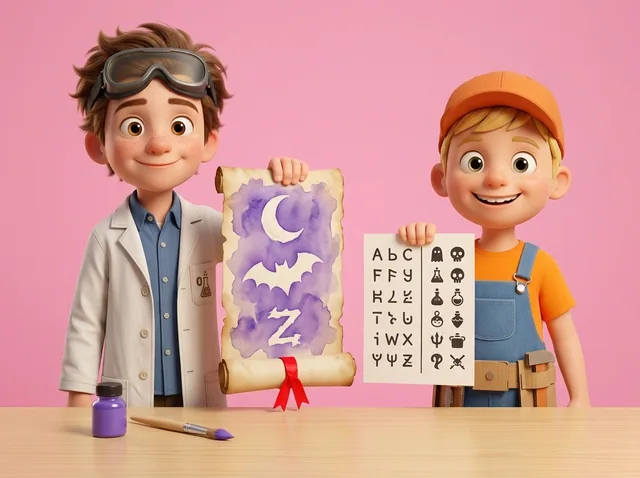
Secret Spell Scroll
Children invent a symbol code, write a hidden spell in white wax crayon and reveal it with watery paint. They learn how a substitution cipher works and why wax resists water, so the paint only soaks into the bare paper.
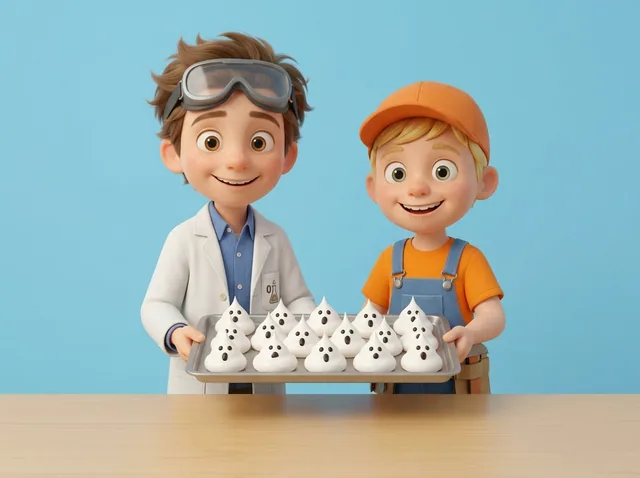
Crispy Meringue Ghosts
Whisking egg whites traps thousands of tiny air bubbles, and sugar holds them in place so the foam stands in ghostly peaks. Slow baking dries the foam into a crisp shell. Children see a liquid turn into a foam and then a solid.
 🔒 Premium
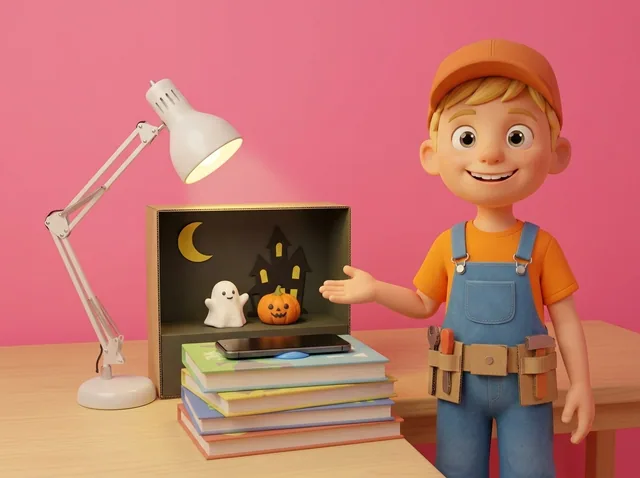
Ghost Story Stop-Motion
Moving a model ghost a tiny bit between each photo and then playing the photos quickly creates the illusion of movement, the same trick used in animated films. Children plan a short story, practise patience and learn how frames per second work.
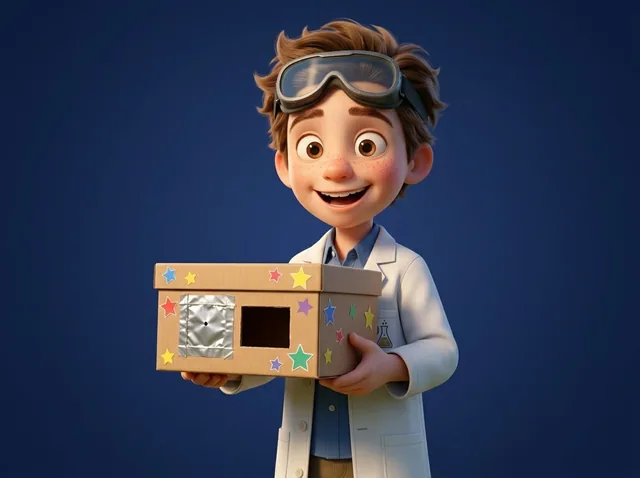
Shoe Box Eclipse Projector
Children explore optics and astronomy by discovering how light travels in straight lines through a pinhole to project a safe, clear image of the Sun during an eclipse.
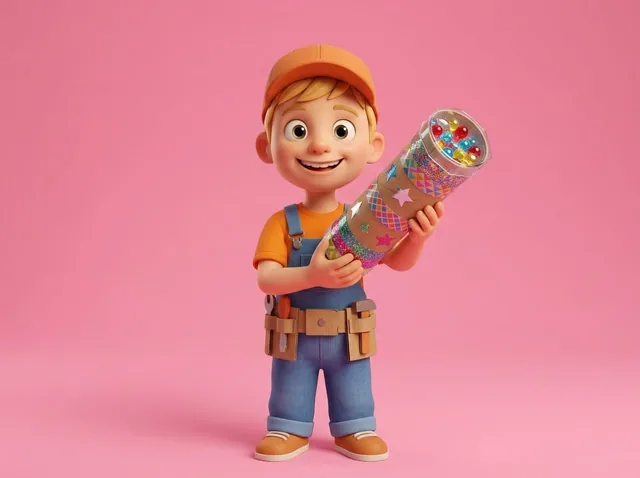
Recycled Tube Kaleidoscope
Children learn about light reflection and optical symmetry by creating repeating mirrored patterns.
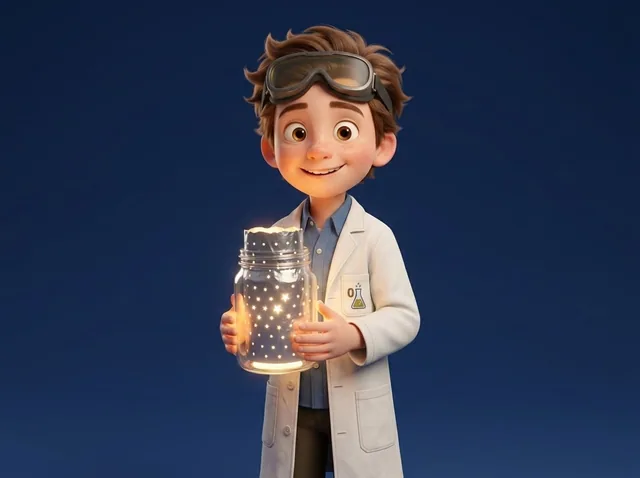
Star Projector Jar
A small light inside a pricked foil jar throws tiny beams onto the walls, showing how light travels in straight lines and turning your room into a peaceful planetarium.
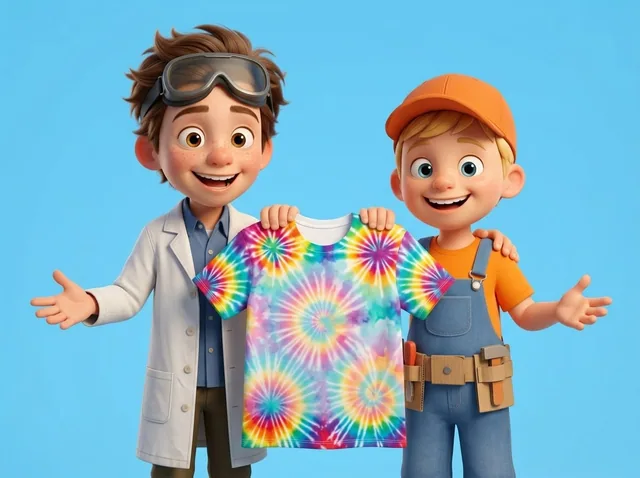
Marker-Pen Tie-Dye Shirt
Watching marker ink spread through fabric with a splash of rubbing alcohol shows how liquids carry colour along fibres, making swirling firework patterns.
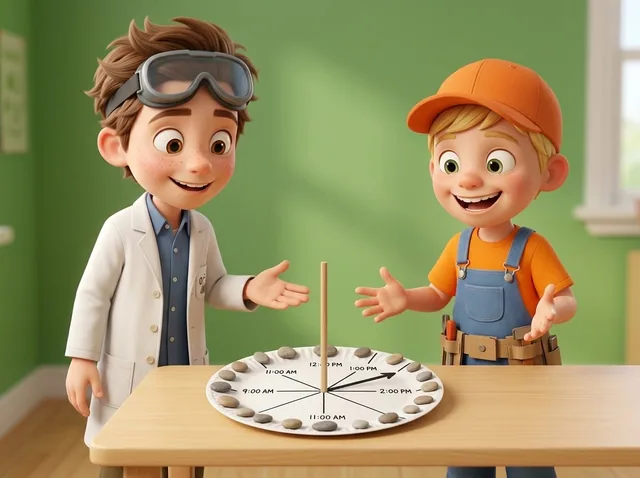
Simple Sundial
The sun moves across the sky, so shadows move too — you can tell the time by them.
 🔒 Premium
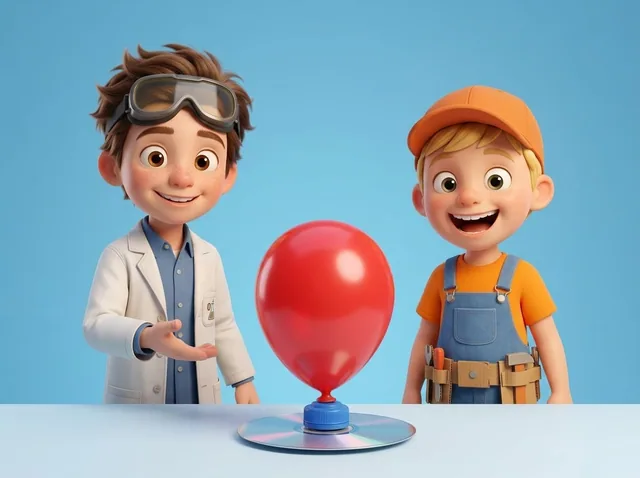
Balloon Hovercraft
A cushion of escaping air reduces friction, so the disc glides almost freely.
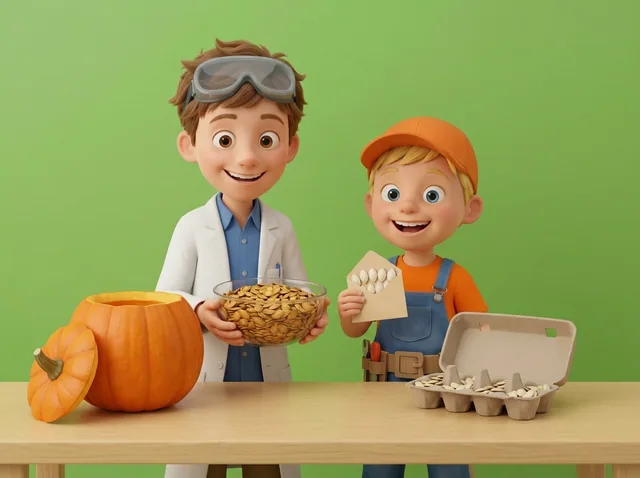
Pumpkin Seed Scientists
Scooping out a pumpkin becomes a science lesson: guess how many seeds are inside, count them in tens, test which ones sink or float, and save some to grow next spring. It covers estimating, counting and how plants make seeds.
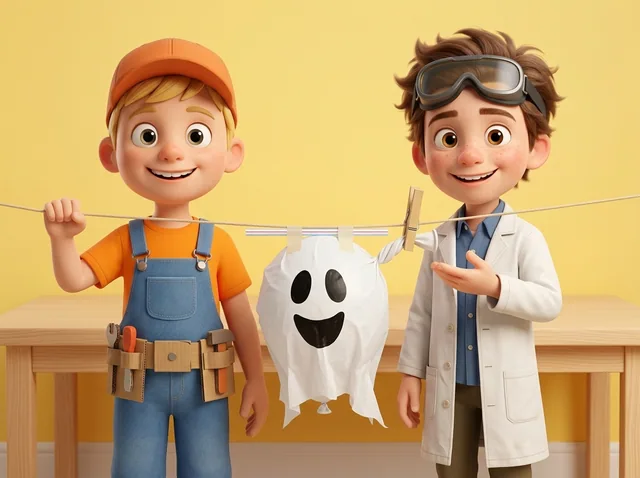
Balloon Ghost Zip Line
When air rushes out of the back of the balloon, it pushes the ghost forward along the string. That is Newton's third law in action: every push has an equal push the other way, the same idea that launches real rockets.
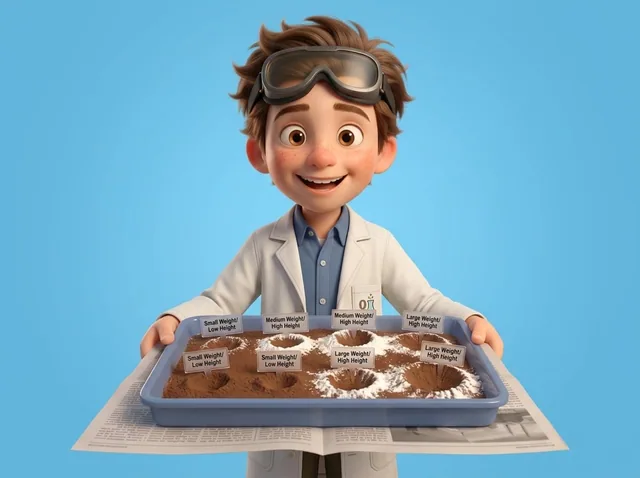
Moon-Crater Impact Tray
Dropping balls into a tray of flour shows how meteorites smashing into the Moon made its craters, and lets you test how the size and drop height of a space rock changes the crater it leaves.
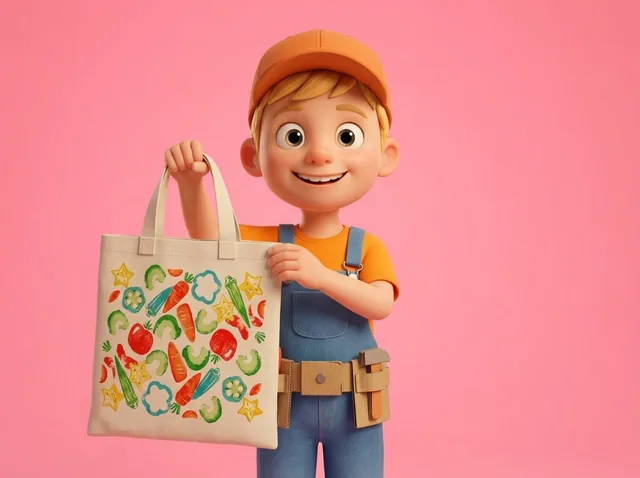
Vegetable-Print Tote Bag
Dipping cut vegetables in fabric paint and stamping them shows how a shape can be printed again and again, and reveals the surprising patterns hidden inside everyday veg.
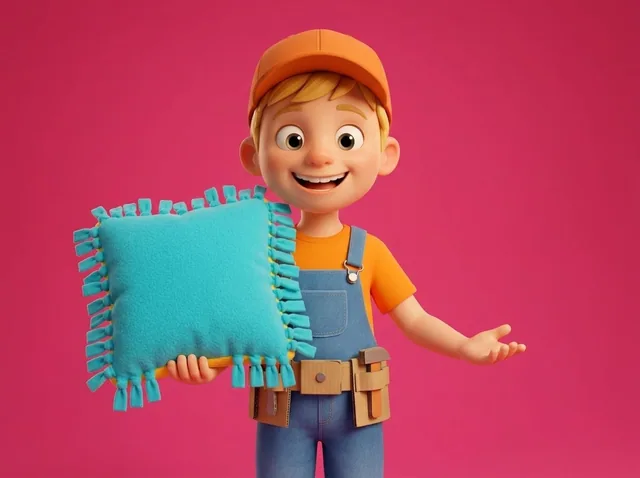
No-Sew Knotted Fleece Cushion
Tying fringes into knots to join two layers shows how fabric can be fastened without any sewing at all, and builds neat, patient finger work.
 🔒 Premium
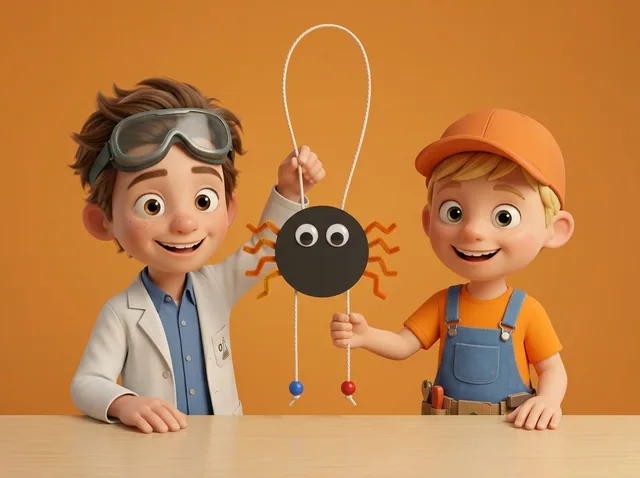
Climbing Spider String Toy
Pulling the strings one at a time makes the spider climb because the angled straws grip the string with friction on one side and slide freely on the other. It is a hands-on way to explore forces, friction and angles.
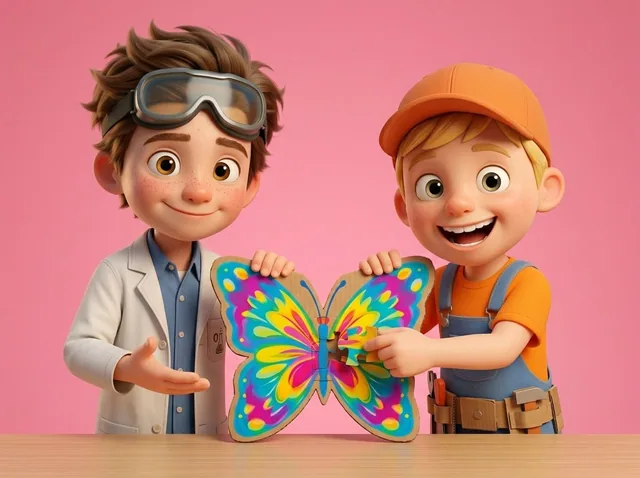
Symmetry Butterfly Puzzle
Making a butterfly whose wings match exactly teaches line symmetry, where one half mirrors the other. Recognising patterns and mirror images is an important part of maths and visual problem-solving.
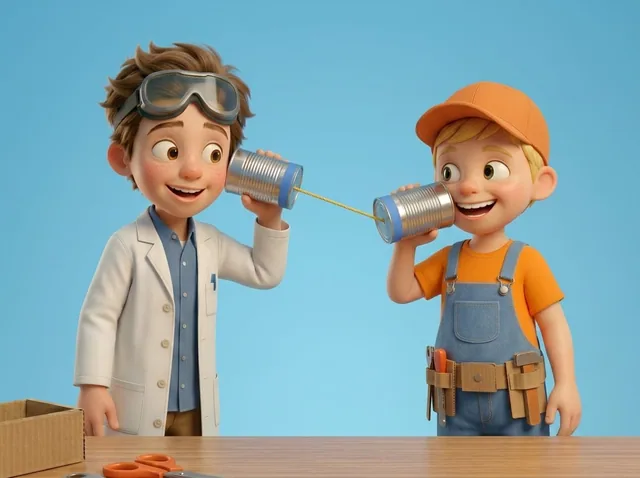
Tin-Can Telephone
Sound travels as vibrations along the tight string from one cup to the other.
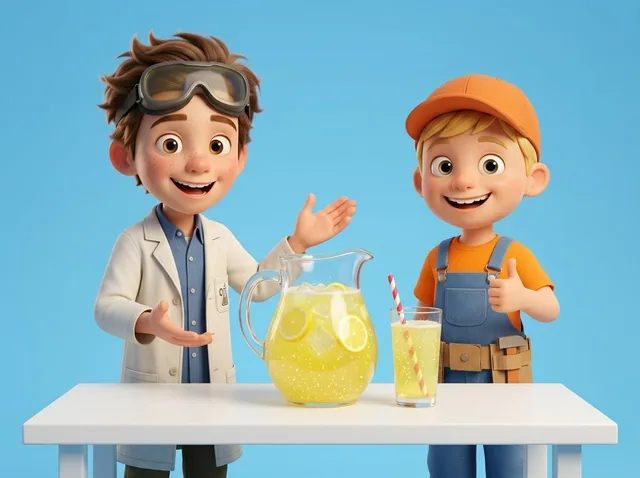
Homemade Fizzy Lemonade
Baking soda reacts with the lemon's acid to make bubbles — you're carbonating your own drink.
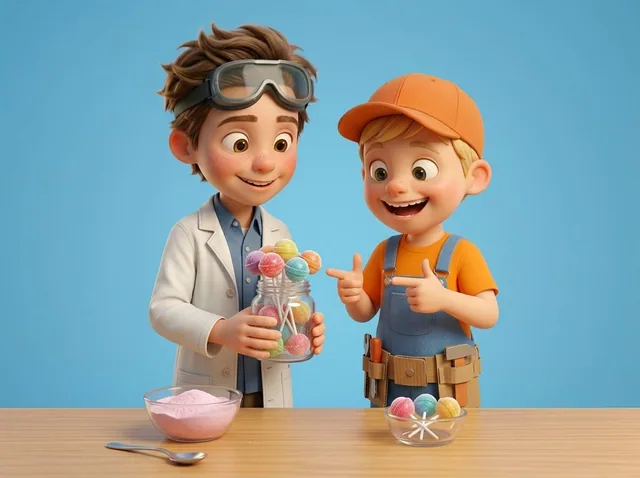
Fizzy Sherbet Sweets
Citric acid and baking soda are dry until they hit the wet on your tongue — then they fizz (that same gas reaction!).
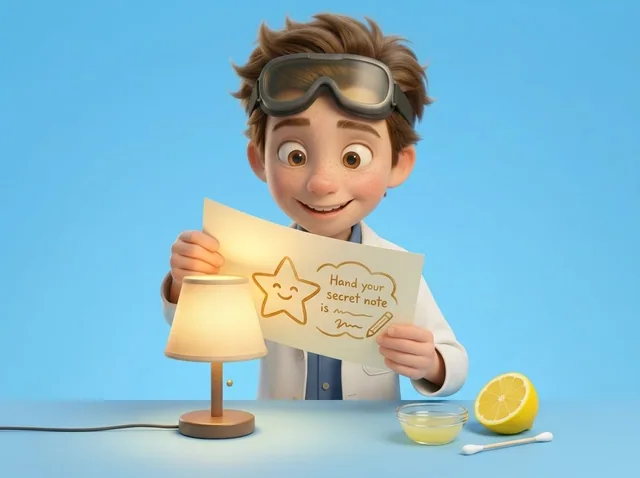
Invisible Lemon Ink
Lemon juice browns faster than plain paper when warmed, revealing the writing - a gentle heat reaction.
 🔒 Premium
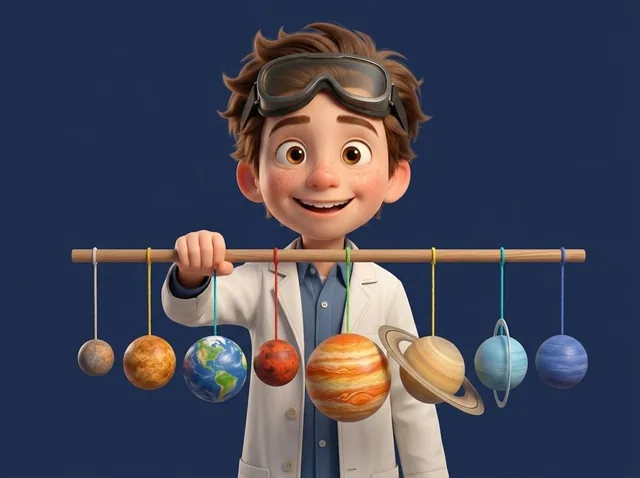
Hanging Planet Mobile
Painting the eight planets in order and hanging them by size helps you picture the real Solar System, and shows that the planets are hugely different in size and distance from the Sun.
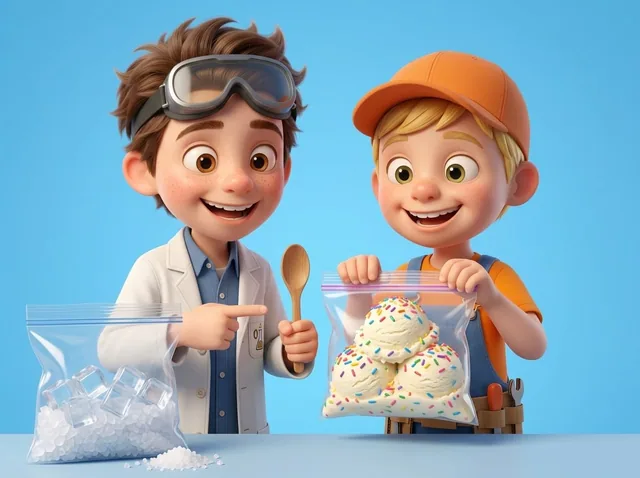
Ice Cream in a Bag
Salt makes ice melt at a colder temperature, pulling heat from the cream so it freezes.
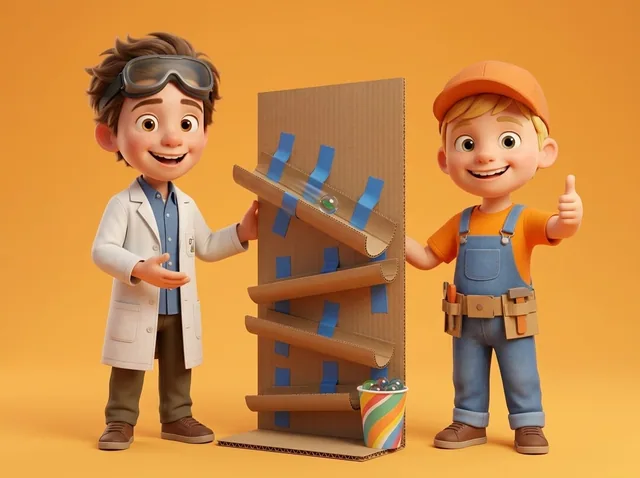
Cardboard Marble Run
Gravity, slopes and speed - steeper ramps make the marble go faster.
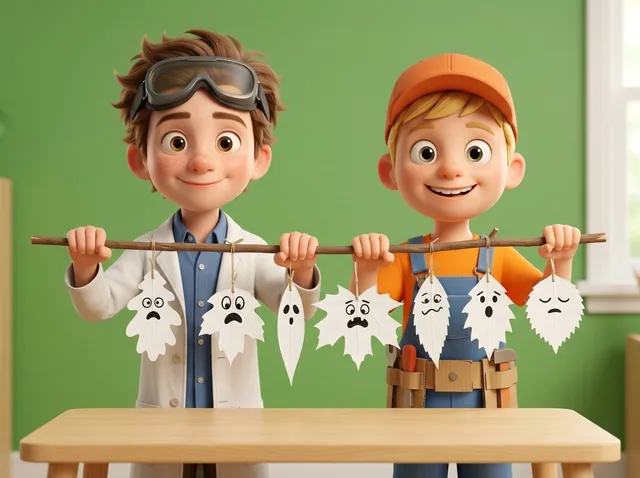
Fallen Leaf Ghost Parade
A leaf hunt becomes a ghost-making session, with each leaf's shape suggesting a different character. Children sort and compare leaves, learn to name a few trees and notice why leaves fall in autumn.
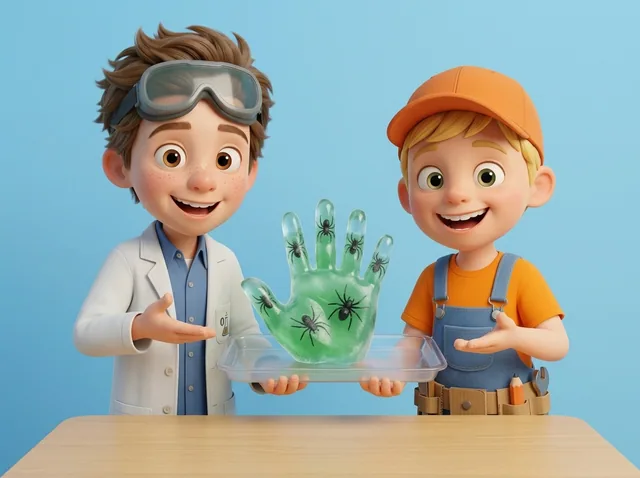
Frozen Monster Hand Rescue
Children rescue toy spiders trapped in a frozen monster hand, finding out that salt and warm water melt ice faster than cold water. It is a sensory way to explore melting, temperature and testing ideas.
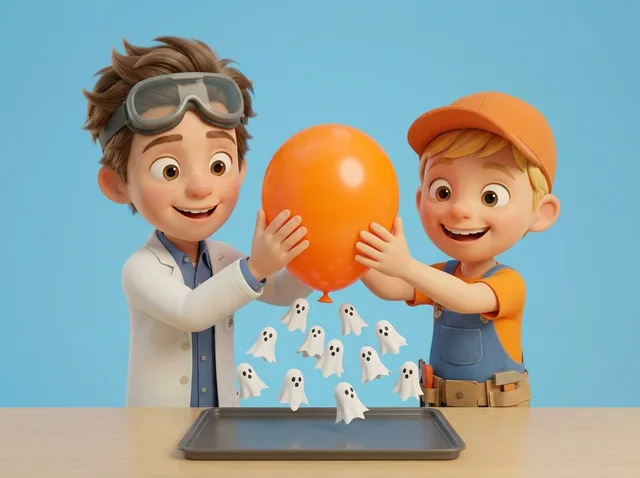
Dancing Tissue Ghosts
Rubbing a balloon on hair or a woolly jumper builds up static electricity, which pulls the tiny tissue ghosts up off the table so they seem to rise and dance on their own.
 🔒 Premium
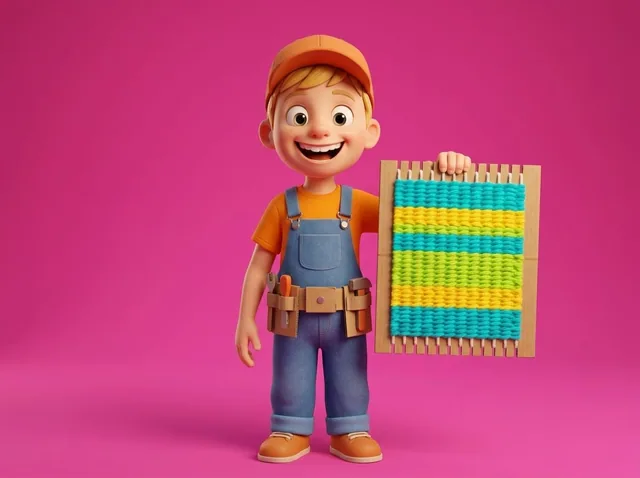
Cardboard-Loom Woven Mat
Weaving over-and-under on a homemade loom teaches the basic structure of all woven cloth and builds rhythm, focus and fine motor control.
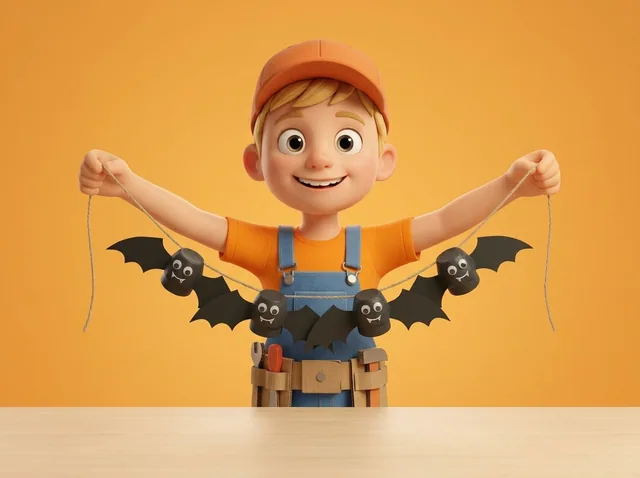
Egg Box Bat Garland
Cutting and painting egg box cups builds scissor control, and making matching wings on both sides is a simple lesson in symmetry. It is also a chance to learn how real bats find their way in the dark using echoes.
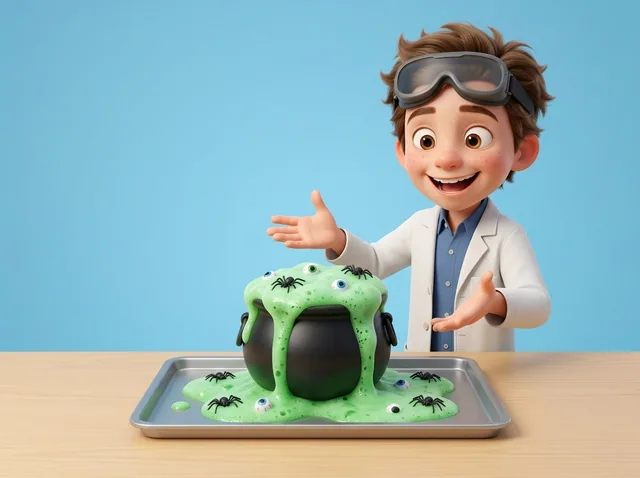
Bubbling Cauldron Potion
Mixing bicarbonate of soda with vinegar makes a gas called carbon dioxide, and a squirt of washing-up liquid traps it in bubbles so the potion foams up and over the cauldron like a witch's brew.
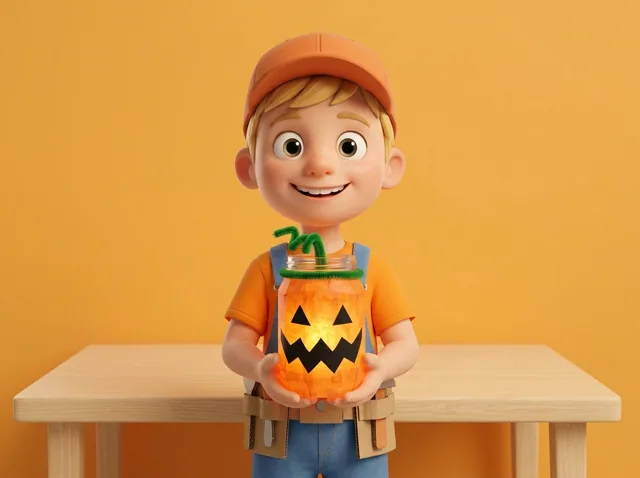
Glowing Jack-o'-Lantern Jar
Turns an empty jam jar into a pumpkin lantern and shows the difference between translucent materials, which let light glow through, and opaque ones, which block it and make the face shapes.
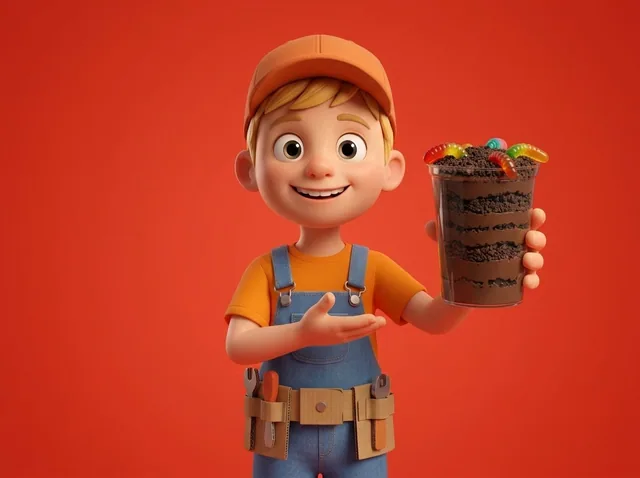
Layered Edible Worm Cup Parfait
Young children practice fine motor layering, counting, and simple culinary assembly skills.
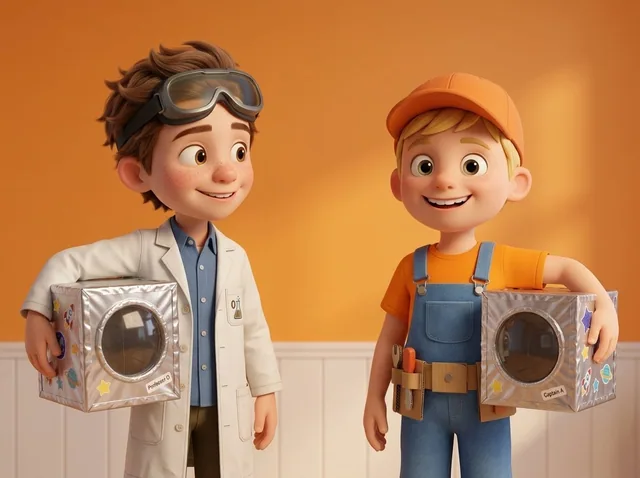
Astronaut Helmet
Making a wearable helmet from a box teaches you why real astronauts need a sealed helmet to breathe and stay safe in space, where there is no air.
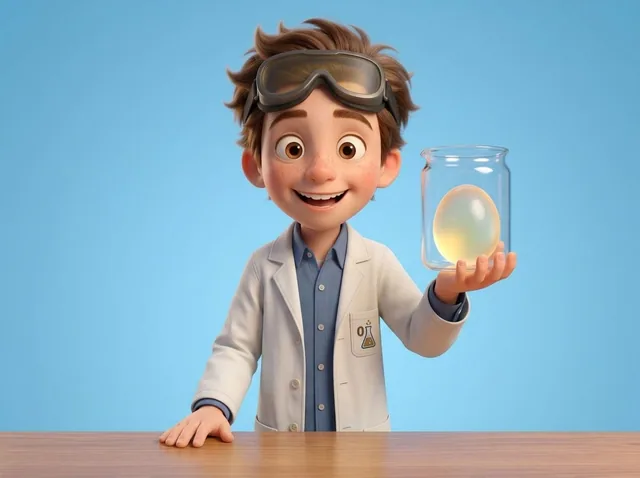 🔒 Premium
Naked (Rubber) Egg
Vinegar (an acid) dissolves the hard shell, leaving the bendy membrane - and the egg swells as water moves in (osmosis).
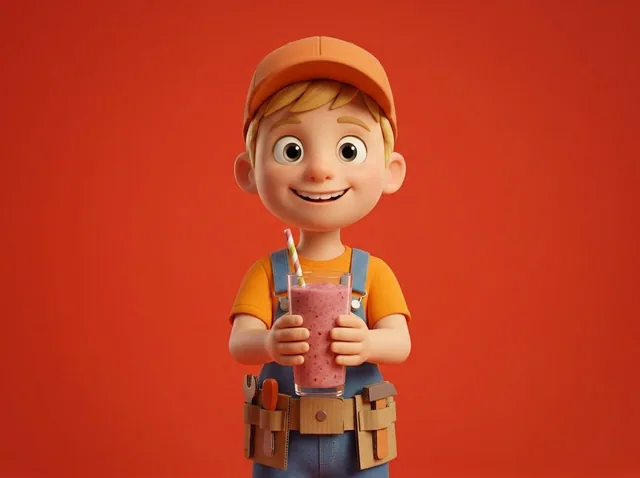
Sunshine Berry Smoothie
Measuring and blending shows how separate ingredients mix into something new, and tasting as you go teaches children to balance sweet and tangy flavours.
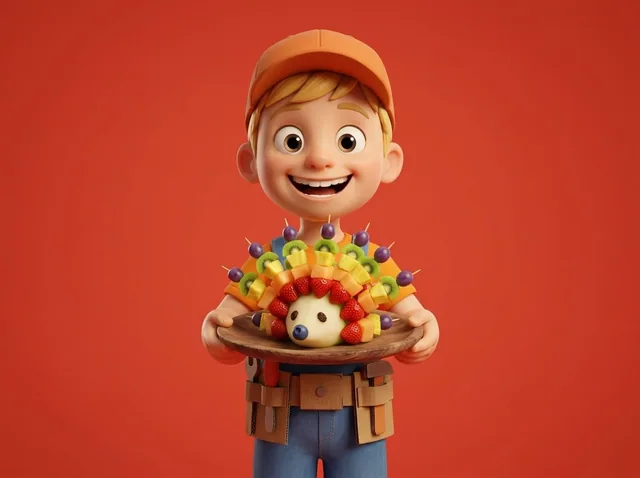
Rainbow Fruit Hedgehog
Arranging fruit by colour teaches sorting and pattern-making, and building an edible animal makes trying new fruits feel like play rather than a chore.
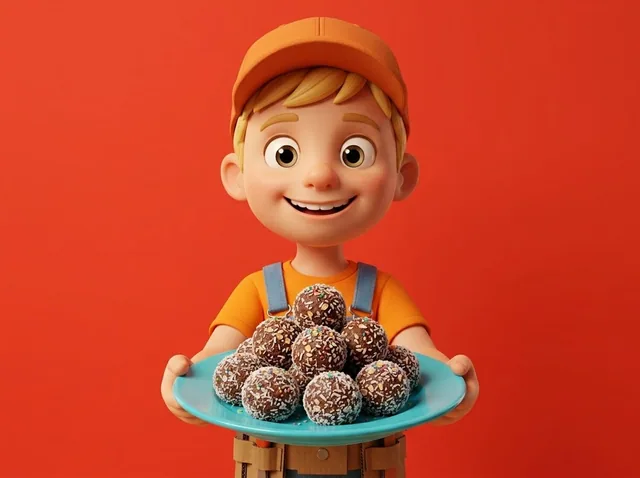
No-Bake Cocoa Energy Balls
Rolling and measuring builds hand strength and early maths, and children see how sticky oats and honey bind a mixture together without any cooking.
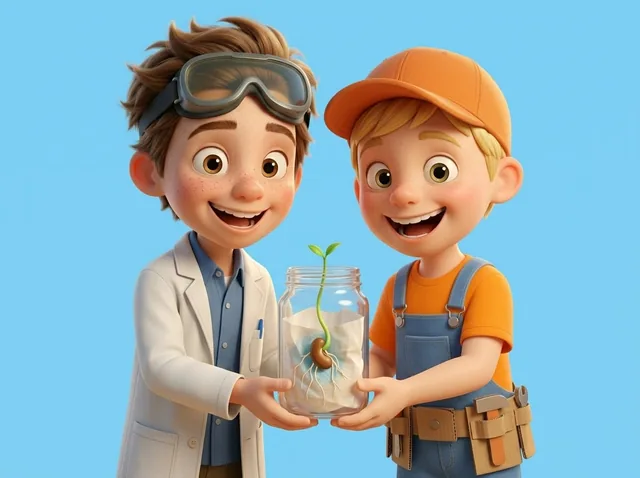
Bean in a Jar
Seeds sprout roots and shoots — you can watch a plant begin, up close.
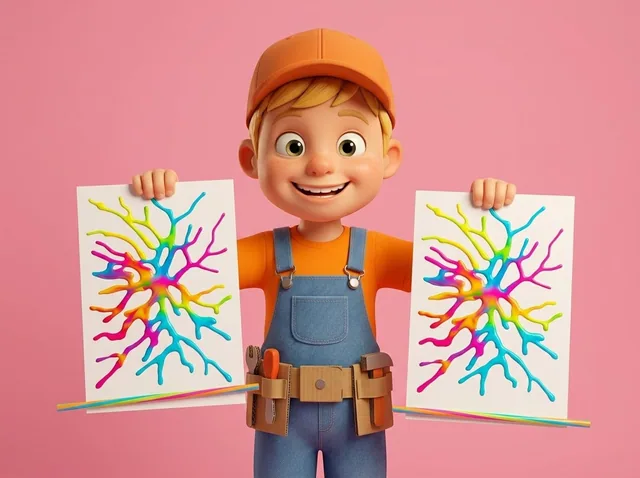
Blow-Straw Painting
Moving air pushes the runny paint into branching, spidery shapes.
 🔒 Premium
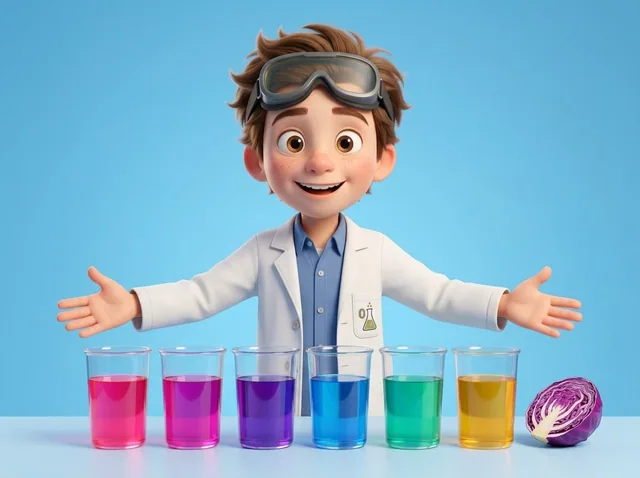
Red Cabbage Colour Changer
Red cabbage juice is a natural indicator - it turns pink in acids and blue/green in alkalis.
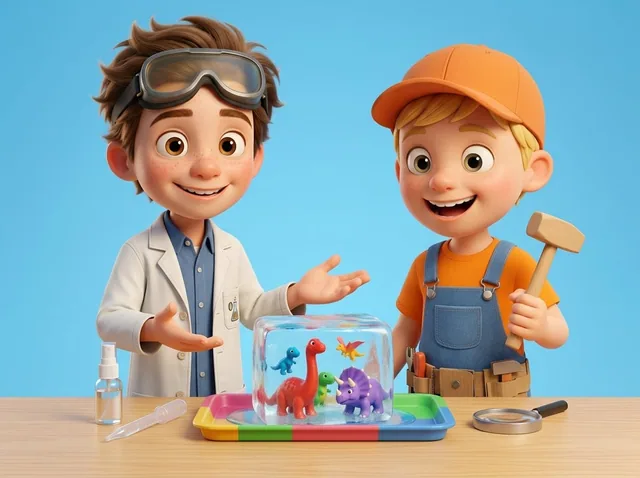
Ice Excavation Rescue
Warm water, salt and gentle tools all speed up melting — salt lowers the temperature ice melts at.
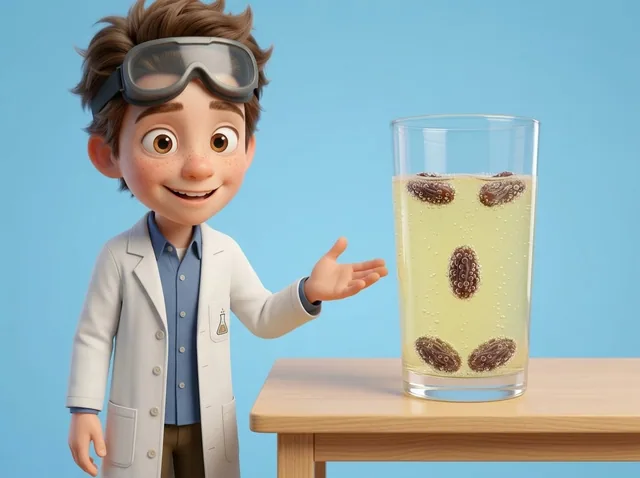
Dancing Raisins
Fizzy bubbles cling to the rough raisins and lift them up; at the top the bubbles pop and they sink - over and over.
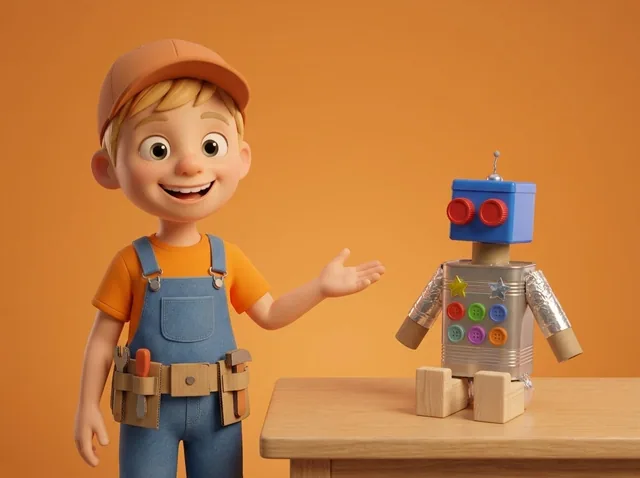
Junk Robot
Design and imagination - planning a build from the parts you have.
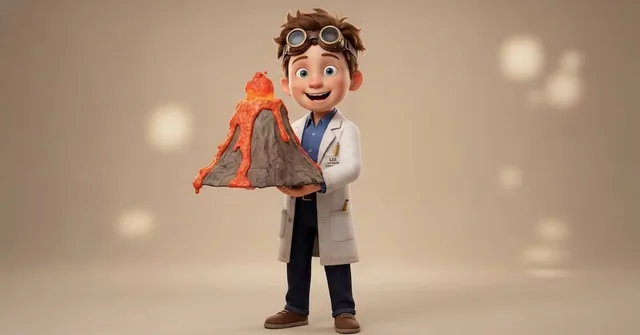
Bottle-Top Volcano
A chemical reaction: an acid (vinegar) and a base (baking soda) make carbon dioxide gas, which is the fizzy foam.
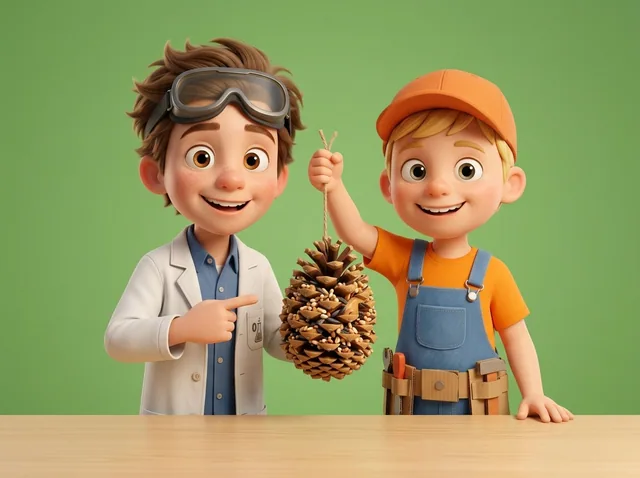
Pinecone Bird Feeder
Birds need high-energy food, especially in cold weather — you can help feed your local birds.
 🔒 Premium
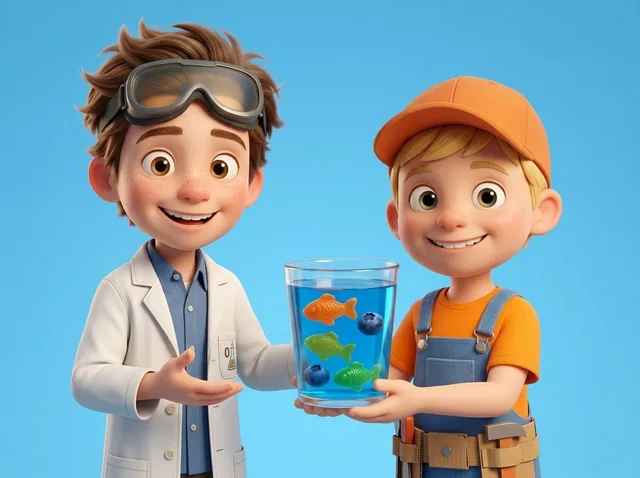
Under-the-Sea Jelly Aquarium
Making jelly shows how a warm liquid sets into a wobbly solid as it cools, and suspending fruit 'fish' introduces the idea of setting things in layers.